
How to Remove Stains from Quartz Countertops, Stain by Stain

To remove stains from quartz countertops, start with warm water, mild dish soap and a soft cloth, then move to the specific cleaner your quartz brand recommends for that type of stain, and always rinse and dry afterward. Most "stains" on quartz are residue sitting on top of a nonporous surface, so they come off with the right product and patience. This guide shows how to remove stains from quartz countertops stain by stain, using the manufacturers' own care guides.
For daily cleaning routines, see our main guide to cleaning quartz countertops, part of our countertop care and repair hub. This page is for the marks that daily cleaning leaves behind.
How to Remove Stains from Quartz Countertops: Start Here
- Identify the stain. Food, ink, mineral, rust or grease each have a different fix.
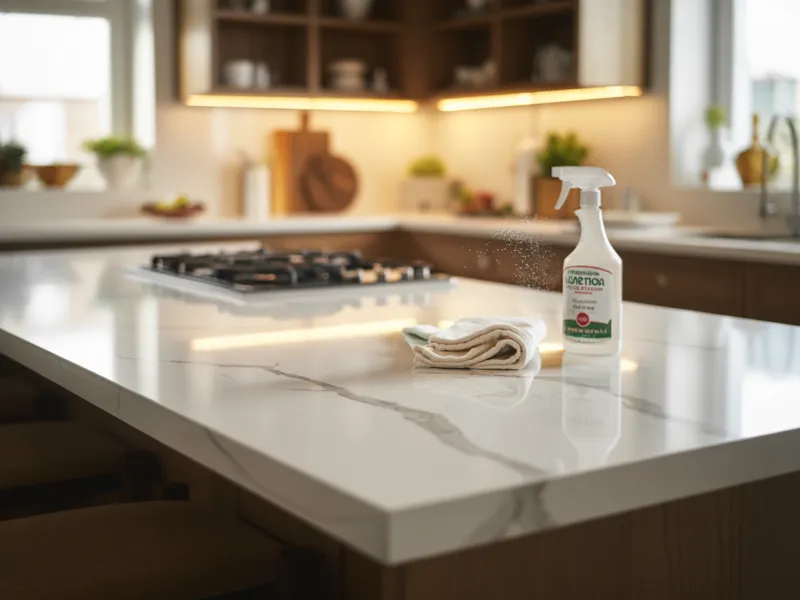
- Start gentle. Warm water, a few drops of mild dish soap and a soft cloth. Let it sit a few minutes on dried spills; Caesarstone says dried spills should be "reanimated with water for several minutes" before cleaning.
- Check your brand's guide before reaching for anything stronger (see the next section).
- Test in a hidden spot. Caesarstone advises checking cleaners on an inconspicuous area first.
- Rinse and dry. Leftover cleaner leaves a film, and a film looks like a dull stain.
Why Your Quartz Brand's Care Guide Matters
This is the part most stain-removal articles skip: the major quartz manufacturers do not agree on cleaners. What one brand recommends, another tells you to avoid.
- Cambria recommends a soft cotton cloth, warm water and mild soap if desired. Its care information says not to use bleach, oven cleaners, Comet, Soft Scrub, S.O.S. pads, products with pumice, or abrasive or harsh scrub pads.
- Caesarstone recommends Soft Scrub Liquid Gel with Bleach for many stains, rubbing alcohol for tougher dried stains, a 50/50 vinegar and water mix for hard water, and Bar Keepers Friend powder for metal and rust marks as a spot treatment.
- Silestone recommends neutral soap and water, household cleaners such as Formula 409 or Windex with a non-scratch scouring pad for grease and difficult stains, and says not to use bleach for maintenance.
Warranties also tie into this. Cambria, Caesarstone and Silestone each say their warranty applies to product maintained according to their care guidelines. If you do not know your brand, check your invoice or ask your installer before trying anything stronger than soap and water.
How to Get Stains Out of Quartz, Stain by Stain
Dried Food, Gum and Nail Polish
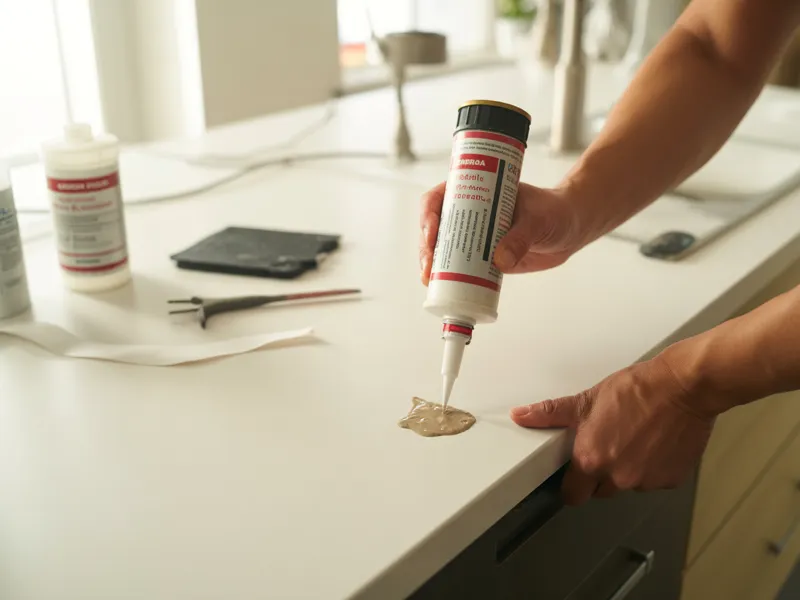
Soften with warm water first. Caesarstone recommends carefully scraping adhered material with a plastic putty knife, then wiping with a damp cloth. Silestone's guide allows a razor blade or putty knife held upright so it does not scratch, and notes that gray marks left by the blade wipe away with soap and water. Never use a scouring pad to force it.
Ink and Permanent Marker
Caesarstone groups ink, markers and print from grocery bags with common household spills and suggests Soft Scrub Liquid Gel or rubbing alcohol on a cloth, followed by a thorough rinse. Silestone lists rubbing alcohol among cleaners for difficult spots and also lists permanent markers and inks among things to keep off the surface, so act quickly. On Cambria, start with soap and water and call Cambria before using solvents.
Coffee, Tea, Wine, Turmeric and Food Coloring
Caesarstone puts these under "stubborn food stains": apply a non-abrasive gel cleaner to a damp cloth, not directly on the countertop, wipe in a circular motion, then rinse and dry. Silestone suggests applying the cleaner with a paper towel and, if needed, leaving soaked paper towel pads on the stain for 3 to 10 minutes before scrubbing with a non-scratch pad.
Grease and Cooking Oil
Dish soap often does it. Caesarstone suggests letting a delicate cleaner sit about five minutes before wiping, and warns that soaps with plant oils can leave a film. Silestone recommends a household cleaner such as Formula 409 or Windex with a non-scratch scouring pad, rinsed right away.
Hard Water and Soap Scum
South Florida water leaves mineral rings around faucets and on bathroom vanities. For hard water stains on quartz, Caesarstone recommends a 50/50 mix of vinegar and water before wiping. Silestone suggests a paste of equal parts baking soda and white vinegar, left 10 to 20 minutes, then removed with cold water and a non-scratch pad, repeating if needed.
Rust and Metal Marks
Gray streaks from pots and rust rings from cans are marks on top of the surface. Caesarstone recommends a small amount of Bar Keepers Friend powder on a damp cloth, very light circular pressure, then a thorough rinse, and says not to use a scouring pad. Because that product is mildly abrasive and Cambria warns against abrasives, Cambria owners should check with Cambria first.
Makeup, Hair Products and Creams
Bathroom counters collect these. Caesarstone recommends its gel cleaner on a damp cloth, a short wait, then a wipe with clean water and a dry cloth. See our bathroom vanity countertops page for vanity options.
Quartz Countertop Stain Removal Products to Avoid
Every manufacturer warns against strong chemicals. Across the Cambria, Caesarstone and Silestone guides, the common list includes:
- Oven and grill cleaners, and other high-pH degreasers
- Paint strippers, furniture strippers and products with methylene chloride or trichloroethane
- Drain cleaners, toilet bowl cleaners and dishwasher detergent (Caesarstone)
- Oil soaps
- Steel wool and abrasive scrub pads
- Sealers, waxes and "stone enhancers"; quartz does not need them
If a harsh product does touch the surface, Caesarstone says to rinse immediately with water.
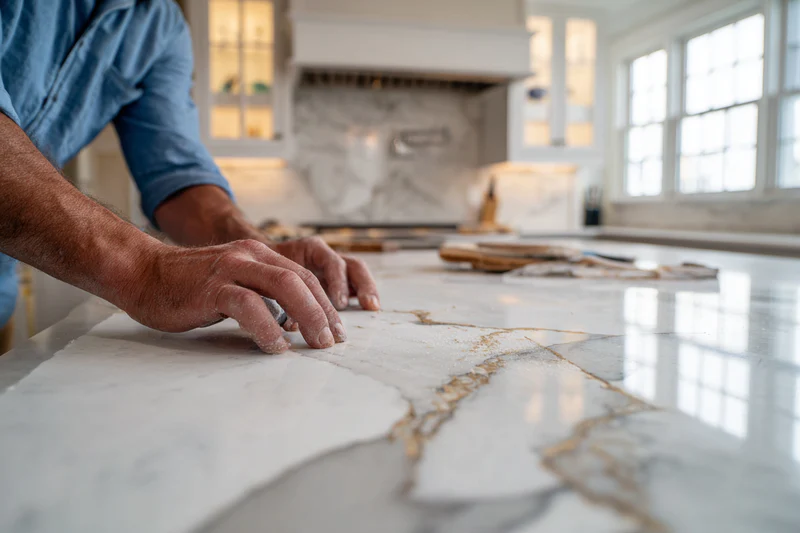
When a Stain on Quartz Is Actually Damage
If you have followed your brand's guide and the mark will not move, it may not be a stain at all:
- Heat marks: a pale, cloudy or yellowish spot where a hot pan, slow cooker or air fryer sat. Cambria, Caesarstone and Silestone all recommend trivets or hot pads.
- Chemical damage: dull or bleached patches from a harsh cleaner left too long.
- Surface wear: a dull patch from repeated abrasive scrubbing. Silestone notes that repeated use of abrasive scrubs can dull its finish.
These do not come out with more scrubbing, and more scrubbing can make them worse. Our guide on how to polish quartz countertops covers dullness in more detail.
When to Call a Pro
Call for help when a mark survives the recommended cleaners, when it is on a seam, or when you suspect heat or chemical damage. Griffin Quartz offers stain removal and surface refinishing as part of its repair services, and we will tell you if a spot can be improved or not. If you are weighing new quartz countertops instead, our showroom in Boca Raton serves homeowners from Jupiter to Delray Beach and Miami, and you can start with the quote calculator.
Frequently Asked Questions
Can quartz countertops stain permanently?
Quartz is nonporous, so most stains sit on the surface and come off with the right cleaner. Marks that do not come off are usually damage rather than a stain: heat scorching, chemical damage from harsh cleaners, or discoloration. Those need a professional assessment.
Can I use bleach or Soft Scrub on quartz?
It depends on the brand. Cambria says not to use bleach, Soft Scrub, Comet or S.O.S. pads on its product. Caesarstone recommends Soft Scrub Liquid Gel with Bleach for several stain types. Silestone says not to use bleach for maintenance. Follow the guide for your countertop.
How do you get hard water stains off quartz?
Caesarstone recommends a 50/50 mix of white vinegar and water for hard water deposits. Silestone suggests a paste of equal parts baking soda and white vinegar left for 10 to 20 minutes, then removed with a non-scratch scouring pad. Rinse and dry the surface afterward.
What removes permanent marker from quartz?
Caesarstone lists ink and markers among common household spills and recommends Soft Scrub Liquid Gel or rubbing alcohol on a cloth, then rinsing. Silestone lists rubbing alcohol among cleaners for difficult spots. On Cambria, start with warm water and mild soap and contact Cambria before using anything stronger.
Is Bar Keepers Friend safe on quartz?
Caesarstone recommends Bar Keepers Friend powder for metal and rust marks as a spot treatment only: a small amount on a damp cloth, very light pressure, then rinse. Cambria warns against abrasive cleaners, so check your brand before using it.
How do I know which brand my quartz countertop is?
Check your invoice or warranty registration, or ask the company that installed it. The brand matters because the manufacturers recommend different cleaners, and the warranty can require that you follow their care guide.
Stain That Will Not Come Out?
If a mark survives your brand’s recommended cleaners, it may be surface damage rather than a stain. Griffin Quartz offers repair and refinishing and can look at it with you. Call (720) 324-1436, Monday to Friday, 7:30 AM to 3:30 PM, or send us a photo.
Send Us a Photo