Instant FREE Estimate

Your perfect quartz countertop is just a click away. Get a free in-home consultation and see why our craftsmanship and warranty set us apart

Free Consultation In-House Fabrication Warranty-Backed Service
Luxury calacatta gold kitchen countertop
🇺🇸

☘ St. Patrick's Day Sale—Up to 50% OFF Select Slabs. Fast Installation in as Little as 1 Week! EXPLORE SALE

Stunning granite countertops in South Florida kitchen
Natural Strength & Beauty

Granite Countertops

Discover the timeless appeal of natural granite. Formed deep within the earth over millions of years, granite offers unmatched durability, heat resistance, and one-of-a-kind patterns that bring nature's artistry to your South Florida home.

The Power of Granite

Granite is an igneous rock formed from slowly cooled magma deep within the earth's crust. This natural process creates a remarkably hard, durable stone with unique crystalline patterns of quartz, feldspar, and mica. For centuries, granite has been prized for monuments, buildings, and countertops due to its strength and timeless beauty.

Superior Heat Resistance

Born from volcanic activity, granite handles hot pots and pans without damage. It's one of the most heat-resistant countertop materials available.

Extremely Durable

Granite is one of the hardest natural stones, highly resistant to scratches and chips. With proper care, granite countertops last a lifetime.

Unique Patterns

Every granite slab is one-of-a-kind, with natural variations in color, veining, and crystal formations. Your countertops will be truly unique.

Excellent Value

Granite offers premium natural stone beauty at a more affordable price point than many alternatives, making luxury accessible.

Increases Home Value

Granite countertops are a sought-after feature that increases your home's market value and appeals to potential buyers.

UV Resistant

Natural granite won't fade or discolor from sunlight exposure, making it suitable for outdoor kitchens and sun-drenched spaces.

Granite Countertop Applications

Granite's durability and natural beauty make it ideal for a variety of applications throughout your South Florida home and outdoor living spaces.

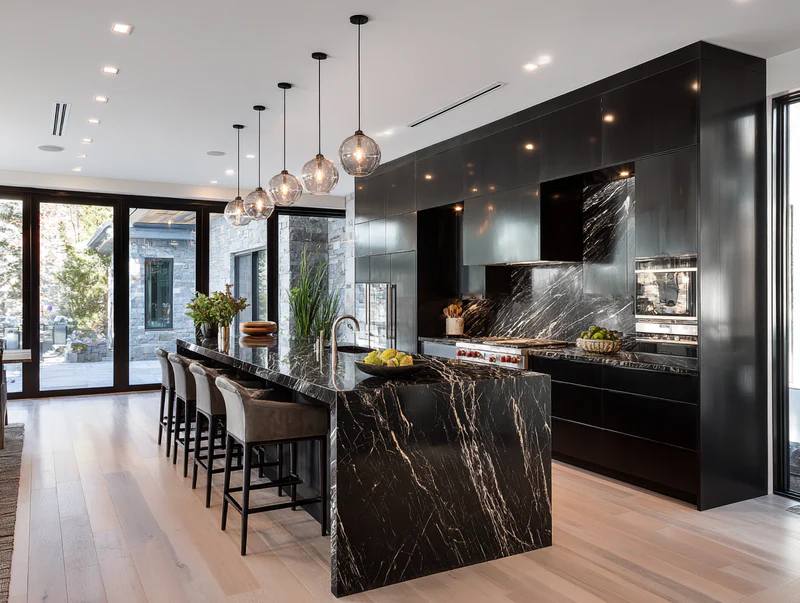
Granite kitchen countertops South Florida

Kitchen Countertops

Granite's heat resistance and durability make it perfect for busy kitchens. Handle hot pots, prep food, and enjoy worry-free cooking.

Explore Kitchen Countertops
Granite bathroom vanity countertops

Bathroom Vanities

Create elegant bathroom spaces with granite vanity tops that resist moisture and add natural sophistication.

Explore Bathroom Vanities
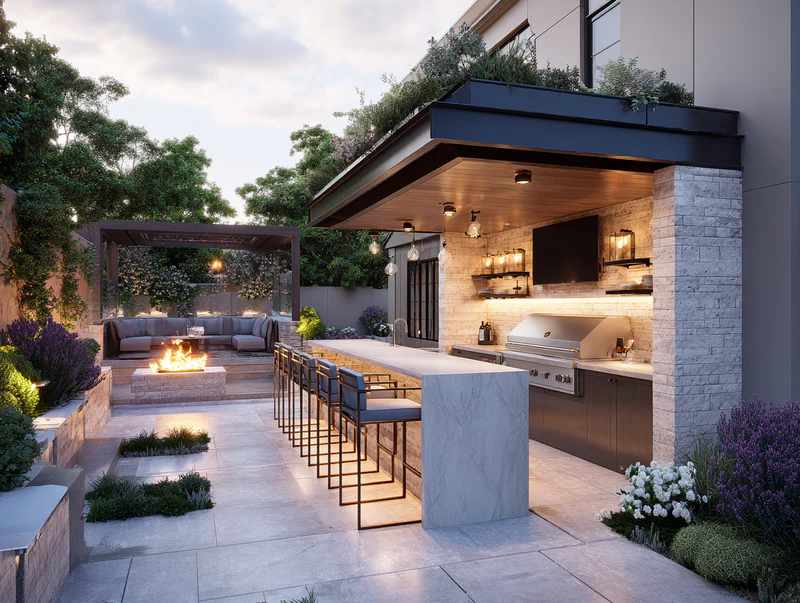
Outdoor granite countertops

Outdoor Kitchens

Granite's UV resistance and durability make it an excellent choice for South Florida's outdoor living lifestyle.

Explore Outdoor Countertops
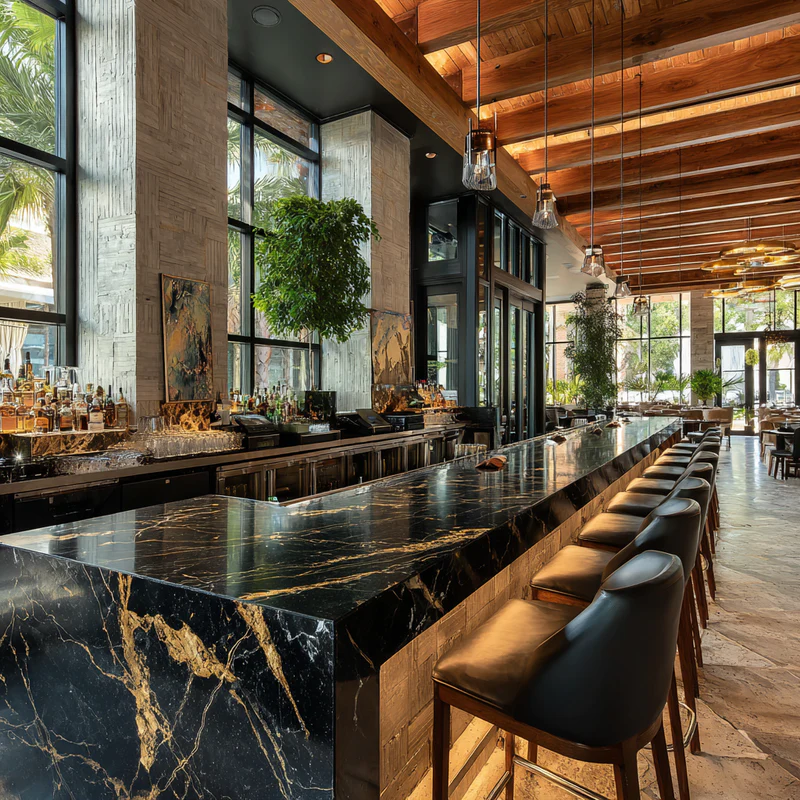
Commercial granite countertops

Commercial Spaces

Restaurants, bars, and hotels benefit from granite's durability and impressive appearance in high-traffic areas.

Explore Commercial Services

Popular Granite Colors

Explore our diverse collection of natural granite

Absolute Black

Deep, consistent black for dramatic elegance

Bianco Romano

White background with gray and burgundy veining

Giallo Ornamental

Creamy gold with gray and brown accents

Blue Pearl

Dark blue-gray with iridescent flecks

Santa Cecilia

Golden brown with cream and black minerals

Ubatuba

Dark green with gold and silver flecks

Colonial White

Light gray with subtle black veining

Tan Brown

Rich brown with black and tan crystals

The Geology Behind Granite

Understanding how granite forms helps explain why it performs so well as a countertop surface

Granite is a plutonic igneous rock, meaning it formed from magma that cooled slowly deep beneath the Earth's surface over millions of years. Unlike volcanic rocks that cool quickly at the surface, granite's slow crystallization process is what gives it that distinctive coarse-grained texture with visible mineral crystals. This gradual cooling, occurring at depths of several miles underground, allowed large interlocking crystals to develop, creating the incredibly hard and durable material we use for countertops today.

Mineral Composition

Every granite slab is a unique blend of minerals, and it is this composition that determines both its appearance and its physical properties. Quartz makes up 20-60% of most granites and contributes the glassy, translucent crystals you often see. Feldspar, comprising 10-65% of the stone, is responsible for much of granite's color range. Mica and accessory minerals like hornblende and biotite add the dark flecks, shimmering highlights, and subtle color variations that make each slab a natural work of art.

Quartz Crystals

Creates white, gray, and translucent areas. Contributes to granite's exceptional hardness and scratch resistance.

Feldspar Minerals

Potassium feldspar produces pink and salmon hues. Plagioclase feldspar creates white and gray tones throughout the stone.

Mica & Hornblende

Biotite mica adds dark black flecks. Muscovite mica creates golden shimmer. Hornblende contributes deep black to dark green crystals.

Why No Two Slabs Are Identical

Because granite forms deep underground over geological timescales, the exact mineral distribution varies throughout every quarry. Temperature fluctuations during cooling, the presence of trace minerals, and tectonic pressures all influence how crystals arrange themselves. Even slabs cut from the same block will have subtle differences in veining, crystal size, and color distribution. This is what makes natural granite so special compared to manufactured alternatives -- your countertops are genuinely one of a kind.

Hardness and Durability

On the Mohs hardness scale, granite rates between 6 and 7, placing it among the hardest natural countertop materials available. For comparison, marble scores just 3 on the Mohs scale, making granite roughly twice as resistant to scratching. Engineered quartz countertops rate at about 7, putting them on par with granite. This hardness, combined with granite's interlocking crystal structure, is what gives it the remarkable resistance to scratching, chipping, and everyday wear that has made it a countertop favorite for generations.

Sealing & Porosity Explained

Not all granite is created equal when it comes to porosity -- understanding your stone helps you maintain it properly

One of the most common questions about granite countertops is about sealing, and the answer depends largely on the specific type of granite you choose. Granite is a naturally porous material, but porosity levels vary dramatically between different types. Understanding where your granite falls on the porosity spectrum helps you determine the right maintenance schedule.

Dense vs. Porous Granites

Dark, dense granites like Absolute Black, Ubatuba, and Black Pearl have tightly packed mineral structures that absorb very little moisture. These stones are naturally more resistant to staining and may only need sealing every 2-3 years, or in some cases, not at all. On the other hand, lighter granites such as Colonial White, Bianco Romano, and Giallo Ornamental tend to have a more open crystal structure, making them more porous and requiring more attentive sealing schedules -- typically every 12 months.

The Water Drop Absorption Test

The simplest way to check if your granite needs resealing is the water drop test. Place a few drops of water on the surface and observe. If the water beads up and sits on top after 15 minutes, your sealer is still working effectively. If the water begins to absorb into the stone and you notice a darkening of the surface, it is time to reseal. This test takes just minutes and can save you from potential staining issues down the road.

Penetrating vs. Topical Sealers

When it comes to sealing granite, penetrating sealers (also called impregnating sealers) are the recommended choice over topical sealers. Penetrating sealers absorb into the stone's pores and create an invisible barrier below the surface without changing the granite's natural appearance or feel. Topical sealers sit on top of the stone and can create a plastic-like film that may peel, scratch, or dull over time. For South Florida homeowners, we recommend resealing every 12-18 months depending on your stone's density and usage, using a high-quality penetrating sealer designed specifically for natural granite.

Granite vs. Quartz: Head-to-Head

See how natural granite stacks up against engineered quartz across every important category

Feature Granite Quartz
Material 100% natural stone 90% quartz + 10% resin
Heat Resistance Excellent -- handles hot pans Good -- use trivets for safety
Maintenance Seal every 1-2 years None required
Stain Resistance Good when sealed Excellent -- non-porous
Scratch Resistance Very good (Mohs 6-7) Very good (Mohs 7)
Cost Range $40-$150/sq ft $50-$150/sq ft
Appearance Unique natural patterns Consistent, many options
UV Resistance Excellent -- won't fade Some may yellow in direct sun
Outdoor Use Yes -- excellent choice No -- resin can degrade
Eco-Friendly Natural, minimal processing Manufactured product

Where the World's Finest Granite Comes From

The most popular granite varieties are quarried from some of the most geologically rich regions on the planet

Granite is quarried on every continent, but certain regions have become renowned for producing the most sought-after varieties. The geological history of each region gives its granite unique characteristics in color, pattern, and mineral density. At Griffin Quartz, we source from top quarries worldwide to bring South Florida homeowners the widest selection of premium granite available.

🇧🇷 Brazil

The world's largest granite exporter. Home to Giallo Ornamental, Santa Cecilia, Blue Bahia, and dozens of exotic varieties prized for their rich colors and dramatic movement.

🇮🇳 India

Known for producing some of the most popular granites worldwide, including Absolute Black, Tan Brown, Colonial Gold, and the stunning Black Pearl with its iridescent flecks.

🇮🇹 Italy

Famous for premium stone, Italy produces elegant granites like Bianco Sardo and Rosa Beta that bring European sophistication to any kitchen or bathroom design.

🇺🇸 United States

American granite from Vermont, Georgia, and Minnesota offers domestically sourced options with unique regional characteristics and reduced shipping distances.

🇿🇦 Africa

South Africa's Nero Impala and other African granites are known for their dense composition, deep coloring, and excellent durability in demanding applications.

Granite for South Florida Outdoor Kitchens

Why granite is the top choice for outdoor countertops in our unique climate

South Florida's outdoor lifestyle demands countertop materials that can stand up to intense sun, tropical rain, salt air, and the heat of grilling. Granite checks every box, making it one of the best-performing materials for outdoor kitchens in our region.

UV Resistance That Lasts

Unlike some engineered materials that can yellow or degrade under prolonged UV exposure, natural granite is completely unaffected by sunlight. Whether your outdoor kitchen faces direct south Florida sun all day or sits under partial shade, your granite countertops will maintain their original color and vibrancy for decades. This UV stability is a natural property of the stone itself, not a coating that wears off over time.

Built for the Heat

Granite's volcanic origins mean it handles extreme heat without flinching. Place searing hot grill grates, smoker racks, or cast iron pans directly on the surface without worry. No other countertop material handles the thermal demands of an outdoor grill station quite like natural granite.

Salt Air and Tropical Weather

For coastal South Florida homes, salt air corrosion is a real concern with many building materials. Granite is naturally resistant to salt air, performing significantly better than marble or certain quartz products in coastal environments. The mineral composition of granite does not react with salt the way sofite stones and calcium-based materials do.

Best Outdoor Choices

For outdoor installations, we recommend darker, denser granite varieties such as Absolute Black, Ubatuba, Black Pearl, and Nero Impala. These dense stones absorb less moisture from rain and humidity, reducing the risk of water damage and biological growth. Because outdoor countertops face more exposure to the elements, plan on sealing them more frequently -- every 6-12 months rather than the typical 12-18 months recommended for indoor granite. With this straightforward maintenance routine, your outdoor granite countertops will look stunning season after season.

Granite Care & Maintenance

While granite is extremely durable, proper care ensures your countertops maintain their beauty and performance for decades.

Do's

  • Seal your granite upon installation and reseal every 1-2 years
  • Clean daily with mild dish soap and warm water
  • Wipe up spills promptly, especially oils and acidic liquids
  • Use cutting boards to protect the surface and your knives
  • Use trivets under hot pots to protect the sealant
  • Perform the water drop test annually to check sealer effectiveness

Don'ts

  • Don't use harsh chemicals or acidic cleaners
  • Don't let spills sit for extended periods
  • Don't use abrasive scrubbers or steel wool
  • Don't sit or stand on your countertops
  • Don't neglect regular sealing maintenance
  • Don't use generic all-purpose cleaners not designed for stone

Frequently Asked Questions

Get answers to common questions about granite countertops

Both have advantages. Granite offers superior heat resistance, unique natural beauty, and often lower cost. Quartz is non-porous and more consistent. Choose based on your priorities for heat tolerance, maintenance, and aesthetics.

Granite countertops in South Florida range from $40-$150 per square foot installed. Basic colors start around $40-$60, while exotic granites can exceed $150. We offer free estimates for accurate pricing.

Yes, granite should be sealed upon installation and resealed every 1-2 years. Sealing protects the porous surface from absorbing liquids and staining. A water drop test helps determine when resealing is needed.

Yes, granite is highly heat-resistant and handles hot pots and pans well. However, using trivets is recommended to protect the sealant and avoid potential thermal shock from extreme temperature changes.

Granite is one of the best choices for outdoor kitchens in South Florida. Its natural UV resistance means it won't fade in our intense sunlight, and its heat resistance makes it perfect for grill areas. Dark, dense granites like Absolute Black or Ubatuba perform best outdoors. Just seal more frequently (every 6-12 months) due to rain exposure.

Granite is an igneous rock formed from cooled magma, while quartzite is a metamorphic rock formed from sandstone under heat and pressure. Both are natural stones, but quartzite is generally harder and more resistant to etching. Granite offers a wider variety of colors and patterns and is typically more affordable. Both are excellent choices for countertops.

Granite countertops can last a lifetime -- literally hundreds of years. As one of the hardest natural materials on earth, granite won't wear down from normal kitchen use. The key to longevity is proper sealing and basic care. Many granite countertops in historic buildings are still in perfect condition after 100+ years.

Compare Countertop Materials

Exploring your options? Discover our full range of premium countertop materials for your South Florida home.

Ready for Beautiful Granite Countertops?

Contact Griffin Quartz today for a free consultation and explore our collection of natural granite slabs. We'll help you find the perfect stone to transform your South Florida home.

Get FREE Estimate Call (720) 324-1436