
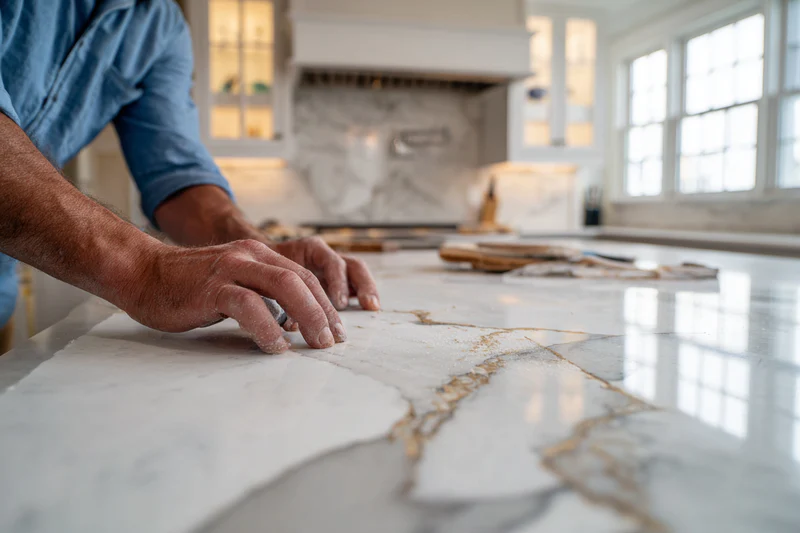
How to Polish Quartz Countertops and Bring Back the Shine

If you are searching for how to polish quartz countertops, here is the short answer: polished quartz does not need a polish, and the manufacturers advise against applying one. The shine comes from the factory. To bring it back, remove the film that is hiding it with a thorough cleaning, rinse, and buff the surface dry with a microfiber cloth. If a spot stays dull after that, it is surface damage that needs a professional.
This is one of the most common calls we get, and most of the time the countertop is fine. It just has a layer of something on it. This guide explains why quartz looks dull, how to restore the shine, and when a dull spot means real damage. For everyday cleaning, see our guide to cleaning quartz countertops, and for other repairs, the countertop care and repair hub.
How to Polish Quartz Countertops: Do They Need It?
No. Cambria's product care FAQ says its countertops "never need polishing or sealing." Silestone's care guide says that once installed, "the sheen on Silestone is the natural luster of the product itself." Quartz is polished during manufacturing, and that finish is part of the slab, not a coating that wears away with normal cleaning.
That is different from granite and marble, which are sealed and sometimes re-polished. Products labeled "granite polish" or "stone polish" are made for natural stone, not quartz.
Why Quartz Countertops Look Dull or Cloudy
- Cleaner and soap residue. Cleaner that is not rinsed off dries as a film. Caesarstone warns that soaps with plant oils can leave a film buildup.
- Polish, wax or sealer buildup. Cambria says sealers, penetrants and topical treatments "will wear off and cause the gloss to appear dull or inconsistent." Silestone says waxes, sprays and sealants give an "artificial, ephemeral shine."
- Hard water. Mineral deposits leave a haze around sinks and faucets, common in South Florida kitchens and bathrooms.
- Patina. Caesarstone explains that a thin patina forms on quartz with daily use and recommends a regular deep cleaning to prevent buildup.
- Real damage. Heat, harsh chemicals and repeated abrasive scrubbing can dull the surface. More on that below.
How to Make Quartz Countertops Shine Again
This is the process I recommend for restoring shine to quartz countertops. Check your brand's care guide first, because the approved cleaners differ between manufacturers.
- Clear the counter and wipe away crumbs so nothing scratches as you clean.
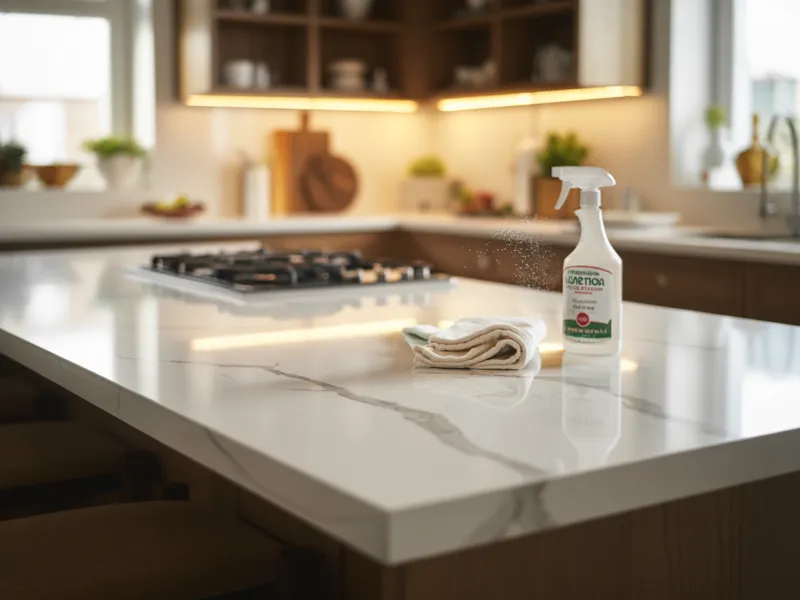
- Wash with warm water and mild dish soap on a soft cloth or non-scratch sponge.
- Treat film and haze with a cleaner your manufacturer approves. Caesarstone suggests a 50/50 vinegar and water mix for hard water; Silestone suggests a non-scratch pad with a household cleaner. Cambria recommends warm water and mild soap and says to avoid harsh or abrasive cleaners.
- Rinse with clean water. This step is the one people skip, and it is why the shine never comes back.
- Dry and buff with a clean, dry microfiber cloth in overlapping circles.
- Look at it in daylight from a low angle. Streaks mean residue is left; repeat the rinse and dry.
If a previous owner or a well-meaning cleaning service used a sealer or wax, it can take several cleanings to remove the buildup. Caesarstone says that if you have heavy patina buildup from non-approved cleaners, its customer care team can give detailed removal instructions, so call your manufacturer in that case.
Why Quartz Countertop Polish and Sealers Can Backfire
Store shelves are full of "quartz countertop polish" sprays. The manufacturers are clear:
- Cambria: "Do not apply any sealers, penetrants, or topical treatments to Cambria Product under any circumstances."
- Silestone: "Do not use water repellents or sealants to bring out the luster."
- Caesarstone: its care guide says "no sealer of any kind should ever be used" and that a sealer leaves a topical film that makes cleaning harder over time.
A spray-on shine looks good for a few days, then wears unevenly where you cook and wipe most, leaving the blotchy look that sends people back to the store for more. The fix is to clean it off, not add more.
Dull Spots on Quartz Countertops That Cleaning Won't Fix
Some dull spots are damage, and no product will restore them at home:
- Heat marks from hot pans, slow cookers or air fryers. Silestone warns that hot pans and small appliances used directly on the surface can cause scorching, dull areas and cracks.
- Chemical etching or bleaching from oven cleaner, paint stripper or high-pH products. Silestone notes bleach left on the surface for more than 12 hours can cause loss of sheen.
- Wear from abrasives, such as scouring powders or pads used over and over in one spot.
- Scratches. Cambria notes that surface markings show more on solid colors than on multicolored patterns.
Do not try to buff these out with a polishing pad or compound. Silestone says its surface "should not be re-polished," and Caesarstone's warranty excludes altering the factory finish and chips or cracks caused by dry cutting or polishing.
Professional Quartz Refinishing: What It Can and Can't Do
Griffin Quartz lists scratch removal, polishing and surface refinishing among its repair and refinishing services. Localized refinishing on quartz is careful, wet, controlled work, and results depend on the color, the finish and the depth of the damage. Some marks can be reduced a lot; others, like a large heat mark on a solid white, may be better handled by replacing a section. We will tell you which is which before any work starts. If a chip is part of the problem, see how to fix a chip in a quartz countertop.
Honed and Matte Quartz: Different Rules
Not every quartz is meant to shine. Honed, matte, concrete and rough finishes are made low-sheen. Cambria says its Matte finish "does not shine" and will show surface markings from normal use that wash off with a soft cloth and warm water. Caesarstone says honed and concrete finishes show fingerprints and metal marks more and may need more frequent cleaning. Trying to polish these finishes changes the surface you paid for.
If your countertops are past saving, or you want a finish that suits how you cook, browse our quartz countertops, try the quote calculator, or visit us in Boca Raton for a free in-home estimate.
Frequently Asked Questions
Do quartz countertops need to be polished?
No. Polished quartz gets its shine at the factory, and Cambria says its countertops never need polishing or sealing. Regular cleaning with warm water, mild soap and a soft cloth, followed by drying, keeps the finish looking as intended.
Can I use granite polish on quartz?
Manufacturers advise against it. Cambria says not to apply sealers, penetrants or topical treatments to its product because they wear off and make the gloss look dull or inconsistent. Silestone says not to use water repellents or sealants to bring out the luster.
Why does my quartz countertop look cloudy?
The most common causes are soap or cleaner residue, a film left by a polish or sealer, and hard water minerals. These clean off. A cloudy patch that does not clean off may be heat or chemical damage and should be looked at by a professional.
Can quartz be re-polished?
Silestone says the surface should not be re-polished, and Caesarstone does not warranty any alteration of a factory-applied finish. Localized refinishing of a damaged area is professional work, and results depend on the color, finish and damage.
How do I make honed or matte quartz shine?
You should not try. Honed, matte and concrete finishes are made to be low-sheen. Cambria notes its Matte finish does not shine, and Caesarstone notes that honed and concrete finishes show everyday marks more and may need more frequent cleaning.
Dull Spot That Cleaning Will Not Fix?
Griffin Quartz offers repair and refinishing, including scratch removal and polishing. Call (720) 324-1436, Monday to Friday, 7:30 AM to 3:30 PM, and we will tell you whether the spot is residue you can clean or damage that needs a professional.
Ask About Refinishing