
How to Fix a Chip in a Quartz Countertop (and When to Call a Pro)

Yes, you can fix a small chip in a quartz countertop yourself: clean the chip, fill it with a color-matched resin from a quartz chip repair kit, let it cure, and level it flush. Larger chips, chips at seams, and any chip with a crack running from it are jobs for a professional. This guide covers how to fix a chip in a quartz countertop step by step, what the manufacturers' warranties say, and how to tell which kind of chip you have.
I have repaired a lot of chipped edges over 20 years of working with stone, and the honest answer is that the result depends more on the color and the location of the chip than on the product you buy. If you are still learning the basics of quartz care, start with our guide to cleaning quartz countertops and the countertop care and repair hub.
Can a Chipped Quartz Countertop Be Repaired?
In most cases, yes. Quartz is engineered stone: crushed quartz bound with resin and pigment. A chip leaves a small void in that surface, and filling the void with a tinted resin is the standard repair across the industry. What you cannot do is make the original material grow back, so a repair is a well-matched fill, not new stone.
Here is how I sort chips before deciding who should fix them:
- Small and shallow (smaller than a pencil eraser, no crack): usually a reasonable DIY repair.
- On a visible front edge or a solid color: doable, but color matching is harder and any mismatch shows.
- At a seam, a sink cutout or a cooktop cutout: better left to a pro, because those areas carry stress.
- A chip with a hairline crack leading away from it: call a pro. The crack is the bigger problem.
What Causes Chips in Quartz Countertops
Cambria's own care guide puts it plainly: "all stone can be damaged by force and no stone is chip-proof," and objects hitting edges, "particularly at sinks or dishwashers, may cause chips." That matches what I see. Most chips happen on the front edge near the sink, at the corner by the dishwasher, or where a heavy pot or cast-iron pan gets set down hard.
Edge profile matters too. Caesarstone recommends a minimum 1/8 inch radius on an edge profile to reduce chipping, and a larger radius (at least 1/4 inch) for high-traffic areas such as sinks. A sharp, square edge takes a knock worse than a softened one. If you are replacing countertops, our edge profile guide explains the options.
Quartz Chip Repair Kit: What You Need
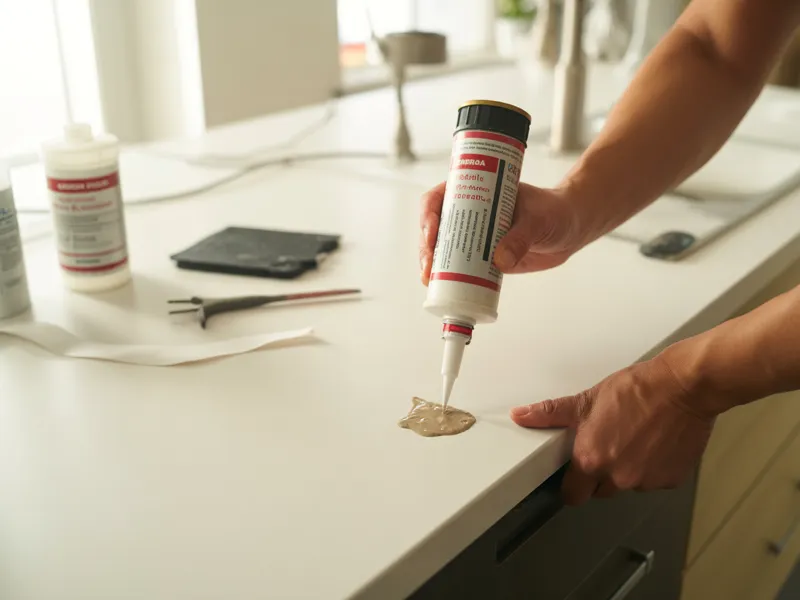
Kits sold for stone and quartz chip repair usually include a clear or tintable resin (epoxy, acrylic or a UV-cure adhesive), colorants, and a razor blade or leveling tool. Before you buy, gather:
- A kit made for quartz or engineered stone, with tints close to your countertop
- Isopropyl (rubbing) alcohol and lint-free cloths
- Painter's tape to protect the surrounding surface
- A new single-edge razor blade
- Gloves, and good ventilation while the resin cures
Match the color in daylight, not under warm kitchen bulbs. Mix a tiny test batch on a piece of tape and let it cure first, because many resins shift slightly as they harden.
How to Fix a Chip in a Quartz Countertop, Step by Step
- Save the chip if you found it. A clean break can sometimes be glued back in place, which often looks better than a fill.
- Clean the chip. Wipe with rubbing alcohol to remove grease and soap film, then let it dry completely. Both Caesarstone and Silestone list alcohol among the cleaners suitable for their surfaces.
- Tape around the chip. Keep the tape a hair away from the edge of the void so the filler can sit slightly proud.
- Mix and tint the resin. Follow the kit instructions exactly. Build the color in small amounts.
- Fill slightly high. Press the resin into the void with the applicator and leave it just above the surface to allow for shrinkage.
- Let it cure fully. Use the cure time on the product, not a guess. With UV-cure resins, use the light that comes with the kit.
- Level it flush. Hold the razor blade almost flat and shave the excess in light passes. Go slowly; gouging the surrounding quartz is the most common DIY mistake.
- Clean up. Remove the tape and wipe the area with warm water and mild soap.
Do not sand or buff the repair with power tools. Wet grinding and polishing belong in a shop or in the hands of someone trained to control the dust and heat. Caesarstone's warranty, for example, excludes chips or cracks that result from "dry" cutting or polishing.
When to Call a Pro for Quartz Countertop Chip Repair
Call a professional when:
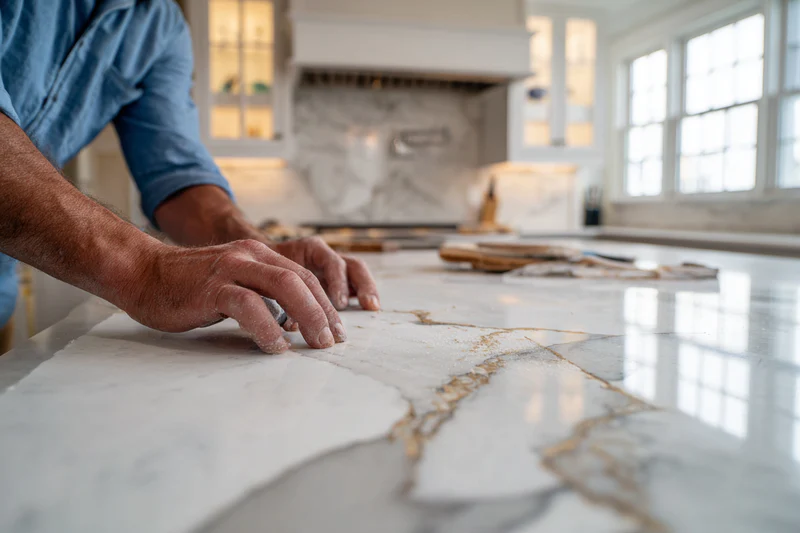
- The chip is larger than a small fingertip or deeper than the surface layer
- There is a crack, even a hairline one, running from the chip
- The chip sits on a seam, a mitered edge or a waterfall corner
- It is next to a sink or cooktop cutout, where the stone carries more stress
- The countertop is a solid white, black or other flat color where a mismatch will show
- You already tried a repair and it did not match or level
A pro can blend colors on site, shape a broken edge back to its profile and finish the repair to match the sheen of the countertop. Griffin Quartz lists chip and crack repair among its repair and refinishing services. In compact South Florida condo kitchens, where the sink edge and dishwasher corner sit close together, those spots deserve extra care.
Does DIY Chip Repair Affect Your Quartz Warranty?
Quartz warranties come from the manufacturer, and each one has its own terms. Before you alter a newer countertop, read yours. A few examples from the manufacturers' published warranties:
- Cambria: its Full Lifetime Warranty does not apply to product that has been "removed, replaced or altered after its original installation," and excludes cracks or chips resulting from force applied by a person, utensil or object. See our Cambria quartz page.
- Caesarstone: the Residential Lifetime Warranty excludes "chips or other excessive impact damage" and does not cover fabrication work not completed by a Caesarstone Certified Fabricator.
- Silestone: the residential warranty excludes damage from chipping, cracking or impact due to customer abuse.
In practice, a chip itself is usually not a warranty item. The concern is that a DIY repair can count as an alteration under some terms, which could complicate a later claim about something else. If your countertops are new, call the manufacturer or your fabricator before you start.
How to Prevent Chips in Quartz Countertops
- Set heavy pots and cast iron down gently, and never drop them on an edge.
- Keep a cutting board under knives and heavy tools. Caesarstone advises against using sharp objects such as knives or screwdrivers directly on the surface.
- Do not stand, sit or kneel on the countertop edge.
- Choose a softened edge profile when you replace countertops, especially along the sink.
- Make sure the dishwasher door and cabinet hardware do not strike the countertop edge.
If a chip is past a kit repair, or you are thinking about replacing a worn countertop altogether, use our quote calculator for a starting point or book a free in-home estimate. We fabricate and install from our shop in Boca Raton.
Frequently Asked Questions
Can chipped quartz be repaired?
Yes. Most small chips on edges and corners can be filled with a color-matched resin and leveled so they are hard to see. The repair is rarely invisible on busy veined patterns or very dark and very white solid colors, and large chips or chips with a crack running from them should be looked at by a professional.
Is a quartz chip repair kit worth using?
A kit can work on a small, shallow chip away from a seam, especially on a speckled or patterned color that hides minor color differences. It is less forgiving on solid colors and on visible front edges. If the countertop is still new, read your manufacturer warranty before you alter the surface.
Does a manufacturer warranty cover a chipped quartz countertop?
Usually not. Caesarstone lists chips and impact damage as exclusions in its residential warranty, Cambria excludes chips resulting from force applied by a person, utensil or object, and Silestone excludes damage from chipping due to customer abuse. Check the terms for your brand.
How long does a quartz chip repair take?
The hands-on work for a small chip is short. Most of the time goes into cleaning, letting the filler cure fully and leveling it. Follow the cure time printed on the product you use; a pro may use a faster-curing resin.
Can a chip in quartz get bigger?
It can. A chip on a sink edge or dishwasher corner keeps taking knocks, and a sharp broken edge can catch and flake further. Filling it sooner protects the edge, and a chip with a hairline crack leading away from it should be checked by a professional.
Chip You Would Rather Not Touch?
Griffin Quartz offers countertop repair and refinishing, including chip and crack repair. Send us a photo or call (720) 324-1436, Monday to Friday, 7:30 AM to 3:30 PM, and we will tell you honestly whether the chip is a simple fill or needs more work. We serve Palm Beach, Broward and Miami-Dade counties.
Ask About a Repair