
Cutting or Drilling Quartz Countertops After Installation

Yes, a quartz countertop can be drilled or cut after installation, but it should be done by a professional with wet diamond tools and dust control, not with a household drill. Drilling quartz countertops in place risks cracks near edges and cutouts, creates hazardous silica dust, and can affect the manufacturer's warranty. Small holes for a faucet, soap dispenser or water filter are usually doable on site; bigger changes often mean recutting the piece in a shop.
Here is what to know before anyone puts a bit to your countertop, from a fabricator who has drilled a lot of quartz. For care basics, start at the countertop care and repair hub.
Drilling Quartz Countertops or Cutting Them After Installation
Quartz is hard, dense and bonded with resin. It can be drilled and cut, which is how every sink, faucet and cooktop opening is made. The difference after installation is control. In a fabrication shop, the slab is flat and fully supported, water is running, and the machine holds the tool steady. On an installed countertop, the stone sits on cabinets, plumbing is underneath, and the work happens in your kitchen.
That is why most fabricators handle post-installation work case by case:
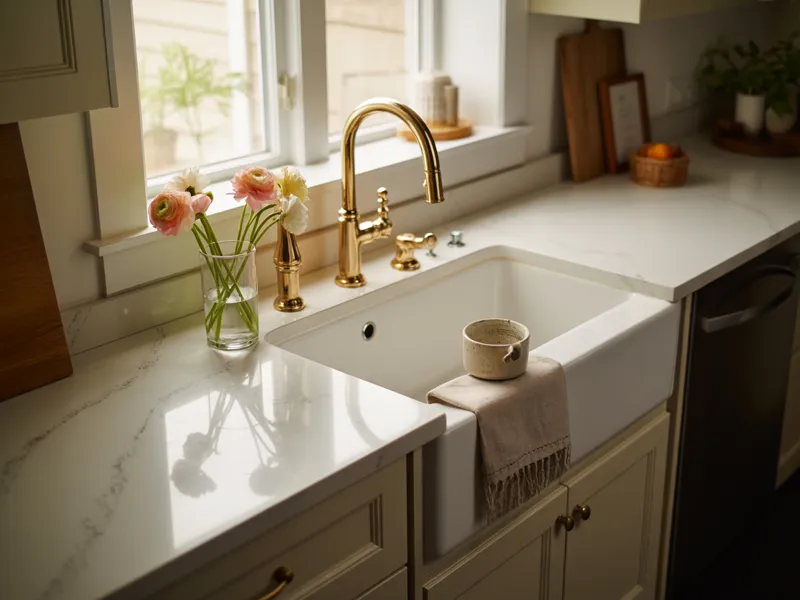
- Usually doable in place: a small round hole for a faucet, soap dispenser, air gap, water filter tap or instant hot water dispenser, placed away from edges and seams.
- Sometimes doable in place: small trims, such as easing an edge for a new appliance.
- Usually needs shop work or a new piece: enlarging a sink cutout, switching from a drop-in to an undermount sink, or fitting a bigger cooktop.
Common Reasons for Drilling a Quartz Countertop After Install
- Adding a soap dispenser or a second faucet hole
- Installing a reverse osmosis or filtered water faucet
- Adding an air gap where local code or the dishwasher maker requires one
- Replacing a faucet with one that needs a different hole pattern
- Adding a pop-up outlet in an island, which also involves an electrician and code rules
The simplest way to avoid all of this is to decide on fixtures before templating. When you order new countertops, give your fabricator the spec sheets for the sink, faucet and accessories so every hole is cut in the shop.
The Risks of Cutting Quartz Countertops in Place
Cracks and Chips
A hole drilled too close to an edge, a seam or another cutout leaves a narrow strip of stone that can crack, now or later. Heat from dry drilling can cause the same problem. Caesarstone's warranty specifically excludes chips or cracks that result from "dry" cutting or polishing.
Damage Below the Counter
Supply lines, drain pipes, dishwasher brackets and wiring run under sinks. A bit that breaks through without warning can hit them.
Water and Mess
Wet drilling is the right method, and it means water and slurry in the kitchen. A pro plans for containment and cleanup.
Silica Dust: Why Drilling Quartz Is a Safety Issue
This is the biggest reason not to DIY. A joint OSHA and NIOSH hazard alert on countertop work says crystalline silica can make up to 95% of the material in engineered stone. Breathing respirable crystalline silica can cause silicosis, which the alert describes as "an incurable, progressively disabling, and potentially fatal lung disease."
The alert notes that exposure happens in fabrication shops and "during on-site finishing/installation." For installation work in homes, it recommends doing as much work as possible under controlled shop conditions, and using water to suppress dust when on-site finishing cannot be avoided. Employers who cut or drill countertops must follow OSHA's silica standard for construction (29 CFR 1926.1153).
A household drill with a masonry bit, run dry, is exactly what those guidelines are meant to prevent.
How Pros Drill a Hole in a Quartz Countertop
I will not give a DIY walkthrough for drilling quartz, but you should know what a proper job looks like so you can judge who you hire:
- Layout first: the hole is placed using the fixture's spec sheet, with safe spacing from the edge, the sink and any seam.
- Check underneath: plumbing and wiring are located and protected.
- Wet diamond core bit: water cools the bit and holds down dust. Many installers also use a vacuum or dust shroud.
- Controlled speed and pressure: the bit is started at an angle or with a guide, then drilled straight without forcing it.
- Support below: the stone is supported so the bit does not blow out the underside.
- Finish and clean up: the hole edge is eased and the area is cleaned.
Bigger Changes: New Sink, Cooktop or Appliance
Enlarging an opening is a different job from drilling a hole. A new cooktop that is a little wider, or a switch to an undermount sink, can sometimes be handled by removing the section, recutting it at the shop and reinstalling it. Sometimes a new piece is the better answer. Cutouts need enough stone around them to stay strong, and Caesarstone's warranty excludes damage caused by installing ancillary products such as sinks, sink brackets, cooktops and dishwashers. Griffin Quartz cuts sink and cooktop openings in the shop for new countertops, and we can look at your existing one and tell you what is realistic.
How Drilling or Cutting Affects Quartz Warranties
Quartz warranties come from the manufacturer, and each has its own terms. From their published warranties:
- Cambria: the warranty does not apply to product that has been "removed, replaced or altered after its original installation," and requires fabrication and installation by Cambria-approved fabricators and installers.
- Caesarstone: excludes fabrication work not completed by a Caesarstone Certified Fabricator, securing mechanical fasteners directly into the material, and chips or cracks from dry cutting or polishing.
- Silestone: covers surfaces installed by an Authorized Installer and does not cover chips, cracks or impact damage due to customer abuse.
If your countertops are under warranty, call the manufacturer or your original fabricator before any new hole is drilled.
Plan Holes Before Fabrication
Almost every post-install drilling job I see could have been avoided with a decision made earlier. Before templating, settle on the sink, faucet, soap dispenser, filter, air gap and cooktop, and hand the spec sheets to your fabricator. If you have questions about stains or chips while you are at it, our other care guides cover those. Planning a new kitchen in Coral Springs or anywhere in South Florida? Start with the quote calculator or a free in-home estimate.
Frequently Asked Questions
Can you drill into a quartz countertop after it is installed?
Yes, a small hole for a faucet, soap dispenser or water filter can usually be drilled in place by a professional using wet diamond core bits and dust control. The location matters: holes too close to an edge, seam or cutout can crack the countertop.
Can you cut a quartz countertop after installation?
Small cuts are sometimes possible in place, but enlarging a sink or cooktop cutout usually means removing the section and recutting it in a shop. Cutting in place creates silica dust and raises the risk of chips and cracks, so it is not a DIY job.
Is drilling quartz dangerous?
The dust is the main hazard. OSHA and NIOSH warn that engineered stone can contain up to 95% crystalline silica, and breathing the fine dust from cutting, grinding or drilling can cause silicosis. They recommend water to suppress dust and doing as much work as possible in the shop.
Will drilling my quartz countertop void the warranty?
It can. Cambria’s warranty does not apply to product altered after its original installation. Caesarstone’s excludes fabrication work not done by a Caesarstone Certified Fabricator and securing mechanical fasteners directly into the material. Check your brand’s terms first.
How big a hole can be drilled for a soap dispenser?
Soap dispensers, air gaps and filter faucets each call for a specific hole size listed in their installation instructions. Give those instructions to your fabricator so the hole matches the part, and plan the spacing from the edge and the faucet before drilling.
Need a Hole or Cutout Added?
Tell us what you are adding (faucet, soap dispenser, filter, cooktop or sink) and send a photo of the area. Griffin Quartz can look at the job and tell you whether it can be done in place. Call (720) 324-1436, Monday to Friday, 7:30 AM to 3:30 PM.
Describe Your Project