
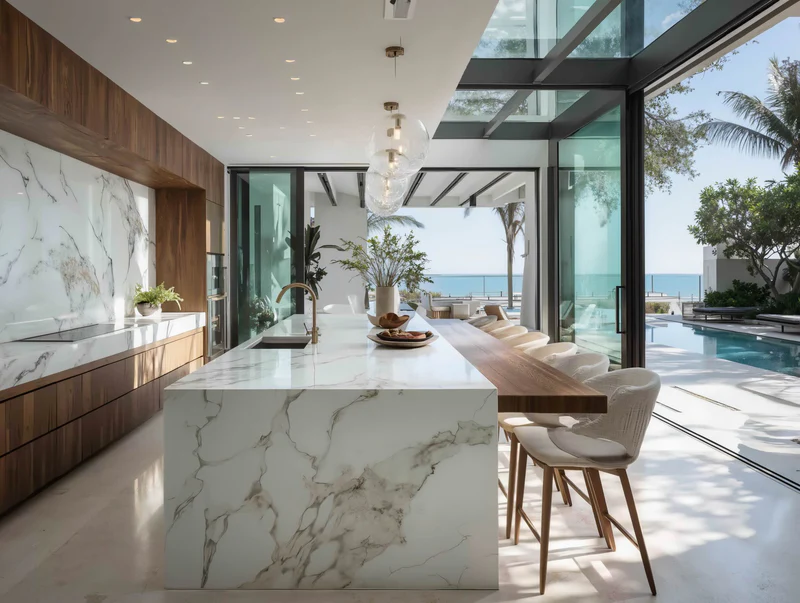
Quartz in South Florida Sun and Humidity: Does Quartz Fade in Sunlight?

Does quartz fade in sunlight? It can. Quartz manufacturers design their standard quartz for interior use, and some warn that direct UV exposure can change its color over time. Silestone's care guide says that over the years, "the color and shade of Silestone products may suffer from the effect of the sun's rays." Humidity, on the other hand, is not a problem for the stone itself, because quartz is nonporous.
South Florida puts both to the test: bright sun through big windows, lanais, Florida rooms, and humidity most of the year. This guide covers what the manufacturers say and how to plan around it. If you are designing a full outdoor kitchen, read our outdoor kitchen countertops guide as well.
Does Quartz Fade in Sunlight?
Quartz countertops are mostly crushed quartz held together with resin and pigment. The manufacturers' guidance on sun reflects that:
- Silestone says, in capital letters in its care guide: "Do not place Silestone outdoors or in places with UV lighting," and its residential warranty does not cover damage from "exposure to ultraviolet light" or outdoor uses.
- Cambria warranties its product for interior use only and excludes "outdoor installation or partially exposed outdoor installations."
- Caesarstone says its Residential Lifetime Warranty "does not cover products installed in any outdoor application" and excludes damage from "uneven exposure to weather conditions."
So the honest answer to "does quartz fade in the sun" is: the manufacturers treat UV as a risk, and they do not warranty standard quartz where it is exposed to the weather.
What Quartz Manufacturers Say About Sun and UV
Each brand draws the line a little differently, and the wording matters when you are deciding where quartz can go:
- Cambria lists examples of uses not covered, including product "installed outdoors, whether in partially covered or otherwise sheltered areas or not," and product "installed in areas exposed to saltwater."
- Silestone warns against outdoor placement and places with UV lighting.
- Caesarstone excludes any outdoor application from its standard quartz warranty. It does sell a separate Outdoor Collection, which it says was designed and tested for weather and UV resistance and which carries its own warranty terms.
If you want quartz outside, the right question to ask is not "will it hold up?" but "does the manufacturer of this specific product allow it, and on what terms?"
Sunny Windows, Lanais and Florida Rooms: Where Is the Line?
Indoor Kitchens with Big Windows
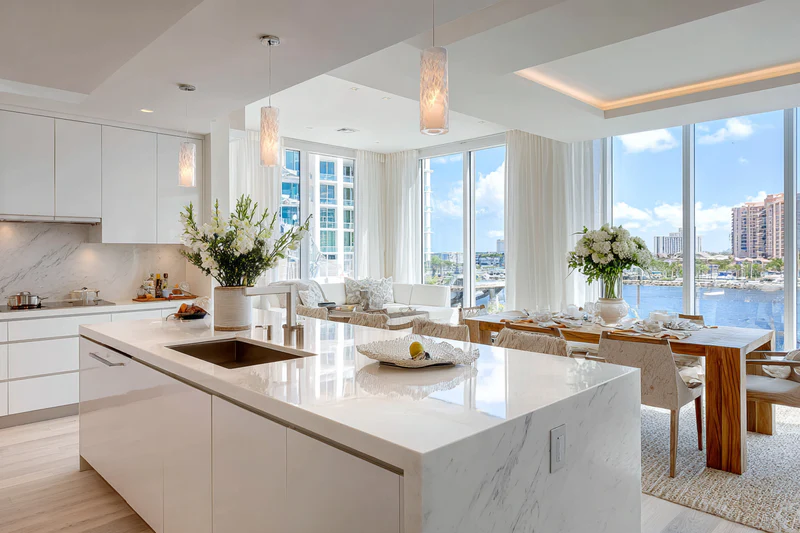
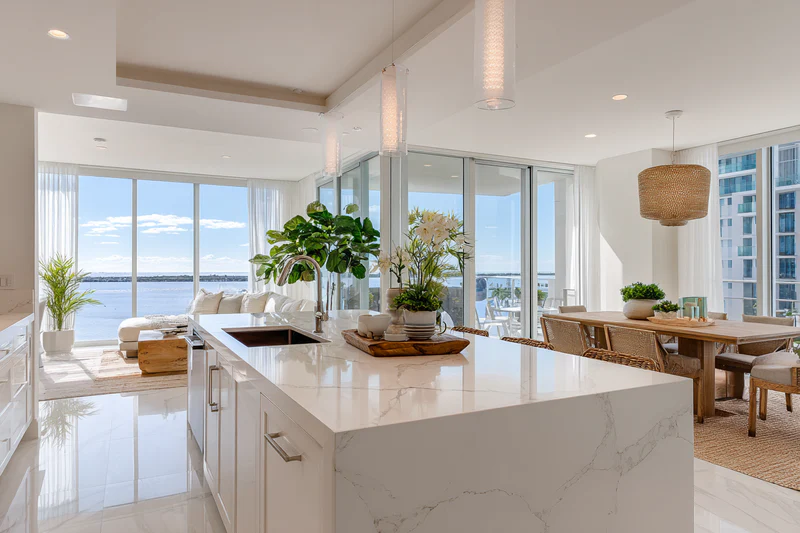
A countertop inside the house, behind glass, is an interior installation under the warranties. The manufacturers do not publish a rule for sunny windows, but Silestone's warning about UV suggests some caution for counters that sit in strong direct sun for hours every day, like a west-facing bay window. Shades or blinds during the harshest afternoon hours are a simple habit.
Screened Lanais and Covered Patios
This is where many South Florida homeowners are surprised. Under Cambria's warranty, a partially covered or sheltered outdoor area is still outdoors. A screened lanai counts. Caesarstone and Silestone also exclude outdoor use. If your plan is quartz on a lanai bar, check with the manufacturer first, and read our outdoor countertops page for options.
Florida Rooms and Enclosed Porches
A fully enclosed, air-conditioned room is closer to an interior space than a screened porch. When the room is somewhere in between, ask the manufacturer before you order.
Quartz Countertops and Florida Humidity
Quartz handles humidity well. Cambria describes its quartz as nonporous and nonabsorbent, which is why it never needs sealing, and Caesarstone describes its quartz as hard and nonporous. Water and humid air do not soak into the stone.
Where humidity does matter is around the quartz:
- Cabinets and substrate: particleboard and MDF can swell with leaks or long-term moisture, and a countertop is only as level as what supports it.
- Sink bases: check regularly for slow drips.
- Caulk lines at backsplashes and around sinks, especially in bathrooms, can collect mildew. Clean them and replace caulk when it breaks down.
- Hard water: South Florida water leaves mineral deposits. Our guide to removing stains from quartz covers what each brand recommends.
Salt Air and Coastal Homes
Many of our customers live near the Intracoastal or the ocean, from Jupiter to Miami Beach. Inside a closed, air-conditioned home, salt air is not the concern it is outdoors. Outside, it is part of why the manufacturers draw the lines they do: Cambria lists areas exposed to saltwater among uses its warranty does not cover. Wipe salt residue from indoor counters near open sliding doors with warm water and mild soap as part of normal cleaning.
Why Is My Quartz Countertop Turning Yellow?
Yellowing or discoloration usually has one of three causes:
- Residue or buildup from cleaners, waxes or sealers. Cambria says topical treatments wear off and make the gloss look dull or inconsistent. This cleans off. See how to polish quartz countertops.
- Heat marks from hot pans, slow cookers or air fryers. Every major brand recommends trivets.
- UV exposure over time, the risk Silestone describes in its care guide.
Heat and UV discoloration are changes to the material and do not scrub off. If you are not sure which you have, send us a photo.
How to Protect Quartz Countertops from Sun in South Florida
- Keep standard quartz indoors, as the manufacturers intend.
- Use shades or blinds on windows that put direct sun on the countertop for hours.
- For outdoor kitchens and lanais, choose a product the manufacturer rates for outdoor use, or a material suited to it.
- Keep up with leaks and caulk under and around the countertop.
- Follow your brand's care guide; the warranties require it.
Planning new quartz countertops for a sunny South Florida kitchen? Get a starting number from the quote calculator, and book a free in-home estimate so we can see the light in your space. More local guides are in our South Florida countertop guide.
Frequently Asked Questions
Does quartz fade in sunlight?
It can over time with direct UV exposure. Silestone’s care guide says the color and shade of its products may suffer from the effect of the sun’s rays over the years, and tells owners not to place it outdoors or in places with UV lighting. Quartz manufacturers generally design their standard quartz for interior use.
Can quartz be used outside in Florida?
Standard quartz generally is not recommended outdoors. Cambria excludes outdoor installations, including partially covered or sheltered areas, from its warranty, and Caesarstone and Silestone exclude outdoor use from their residential warranties. Caesarstone makes a separate Outdoor Collection with its own terms.
Is a screened lanai considered outdoors for quartz?
Under Cambria’s warranty, yes: it lists product installed outdoors, whether in partially covered or otherwise sheltered areas or not, as an uncovered use. Check your brand’s terms before planning quartz for a lanai or covered patio.
Does humidity affect quartz countertops?
Quartz is nonporous, so humidity does not soak into it and it does not need sealing. In humid South Florida homes, pay more attention to what is under and around it: cabinets, the sink base, and caulk lines, especially in bathrooms.
Why is my quartz countertop turning yellow?
Common causes include residue or buildup from cleaners and sealers, heat marks from hot cookware, and long-term UV exposure. Residue cleans off; heat and UV discoloration usually do not. A professional can help you tell which one you have.
Sunny Kitchen or Lanai?
Tell us where the countertop is going and how much sun it gets, and we will walk through what each manufacturer allows. Call Griffin Quartz at (720) 324-1436, Monday to Friday, 7:30 AM to 3:30 PM, or request a free in-home estimate.
Talk to Griffin Quartz