
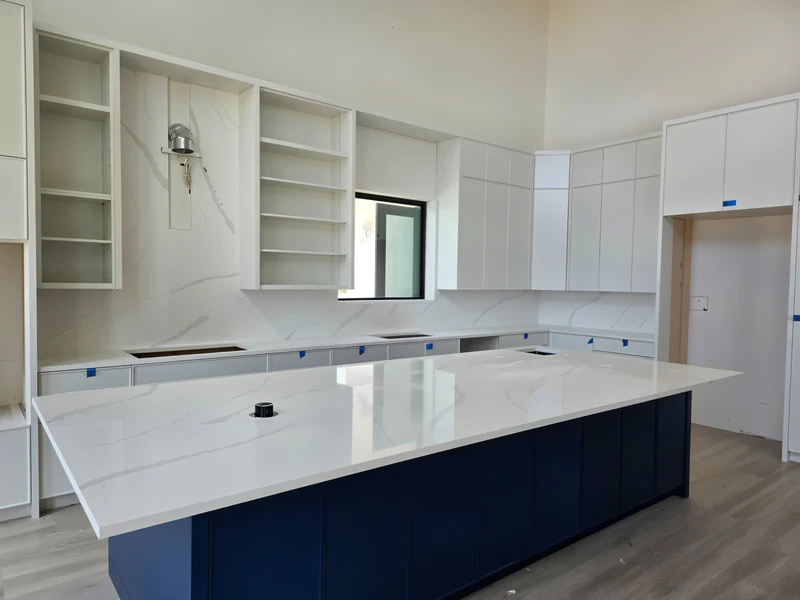
Hurricane Season Countertop Installation in South Florida

You can schedule a countertop installation during hurricane season in South Florida; projects go in all year. The season, which runs from June 1 to November 30, mostly affects timing: installs pause when a storm threatens, condo buildings lock down during watches, and trades get busy after a storm passes. A hurricane season countertop installation goes smoothly when you choose materials early, keep a few days of flexibility, and know what your building requires.
This guide is part of our South Florida countertop guide. For the steps of the install itself, see our quartz countertop installation guide.
When Is Hurricane Season in Florida?
The Atlantic hurricane season officially runs from June 1 through November 30. According to NOAA, the statistical peak is around September 10, and most activity falls between mid-August and mid-October. NOAA reports that this window accounts for the large majority of tropical storm and hurricane days in an average season.
For planning a remodel, that gives South Florida homeowners three rough windows:
- June and July: the season is open, but activity is usually lighter.
- Mid-August to mid-October: the busiest stretch. Plan for the chance of a pause.
- Late October and November: activity usually tapers, though storms can still form.
Hurricane Season Countertop Installation: Can You Book Now?
Yes. A typical quartz project moves through measuring (templating), fabrication in the shop, and installation. Only the steps that happen at your home, templating and installation, depend on the weather and building access. Fabrication happens indoors.
What changes during the season is certainty. A storm that is days away can move an install date even if it never makes landfall, because homeowners, installers and building staff are all preparing. That is normal, and it is better than rushing a job.
How Storms Can Affect a Countertop Installation Schedule
Before a Storm
- Installs are usually rescheduled once a watch or warning is issued for your area.
- Many condo associations stop contractor access and elevator bookings while the building puts up shutters and secures common areas.
- Your own prep, like shutters and moving outdoor furniture, takes priority over a kitchen project.
After a Storm
- Power and water outages can slow fabrication shops, which run wet saws and polishing equipment.
- Plumbers, electricians and building managers are busy with storm repairs, and sink or cooktop hookups may wait.
- Roads, bridges and building access can take time to reopen.
Slabs and Transport
Quartz slabs and finished countertops are heavy and move on open racks. Installers generally avoid carrying stone in high wind or heavy rain, both for the crew's safety and to protect the pieces. A rainy afternoon may shift the day even without a named storm.
Planning a Countertop Project Around Hurricane Season
A few steps make a hurricane season kitchen remodel much easier:
- Choose your quartz early. Pick the brand, color and edge before scheduling. Browse quartz countertops or use the quote calculator to start.
- Finish cabinets first. Templating needs installed, level cabinets. Delays in cabinet delivery move everything that follows.
- Pick fixtures before templating. Sink, faucet, cooktop and accessories should be on site or specified so cutouts are made in the shop.
- Build in a buffer. If you are hosting family or have a move-in date, do not schedule the install for the day before.
- Book the plumber. Arrange the disconnect and reconnect of the sink and dishwasher ahead of time.
- Keep contact details handy for your fabricator, plumber and building manager so a reschedule takes one call.
Condo Countertop Installation During Storm Watches
Condos add another layer. Many associations require an approved work request, a certificate of insurance and an elevator reservation before any contractor enters, and many suspend contractor work when a watch or warning is posted. After a storm, the building's own repairs usually come first. If your install falls in the peak weeks, ask management how they handle rescheduling. Our condo countertop approval checklist walks through the paperwork, and our condo countertop installation guide covers the bigger picture.
Protecting New Quartz Countertops Before a Storm
- Clear the counters. Move small appliances and heavy items so nothing falls if windows or doors are breached.
- Do not stack heavy supplies on overhangs. Cases of water and generator fuel belong on the floor or in a pantry, not on an unsupported island overhang.
- Keep hot appliances off the stone. During outages, people cook on camp stoves and hot plates. Cambria, Caesarstone and Silestone all recommend trivets or hot pads under hot cookware and cooking appliances, and a camp stove belongs outdoors anyway.
- Photograph the kitchen. Photos of your countertops and cabinets before the storm help if you need to file an insurance claim.
After a Hurricane: Checking Countertops for Water and Cabinet Damage
Quartz is nonporous, so standing water does not soak into the stone. Cambria describes its quartz as nonporous and nonabsorbent. The concern is what holds the countertop up. Base cabinets made of particleboard or MDF can swell when they get wet, and a cabinet that shifts can stress a seam or a narrow section of stone.
After flooding, check for:
- Gaps opening at seams or between the countertop and backsplash
- A countertop that is no longer level, or doors and drawers that bind
- New cracks near sink or cooktop cutouts
- Water damage or mold in the sink base
Manufacturer warranties generally exclude damage from structural movement and inadequate support. Cambria excludes improper or insufficient support, Caesarstone excludes damage caused by acts of God and structural movement, and Silestone excludes cracks caused by structural settling or movement. Document the damage with photos, talk to your insurer, and have a professional look before you reuse or replace anything.
Griffin Quartz serves homeowners from West Palm Beach to Miami, and our kitchen and bath countertop team can help you plan a new project or assess a damaged one. Call us or request a free in-home estimate.
Frequently Asked Questions
When is hurricane season in Florida?
The Atlantic hurricane season officially runs from June 1 to November 30. NOAA notes that most activity falls between mid-August and mid-October, with the statistical peak around September 10.
Can you install countertops during hurricane season?
Yes. Countertops are installed across South Florida all year. Hurricane season mainly affects scheduling: work pauses when a storm threatens, and the days after a storm can be busy for trades and building managers. Build a little flexibility into your timeline.
What happens to my installation date if a storm is coming?
Expect it to move. Installers typically reschedule when a watch or warning is issued, and many condo associations stop contractor access and elevator bookings while buildings prepare. Ask your fabricator how they handle weather rescheduling before you book.
Is quartz damaged by flooding or humidity?
Quartz is nonporous, so water does not soak into it. The risk after a flood is what supports it: cabinets and substrates that swell or shift. Cambria, Caesarstone and Silestone all note that damage from inadequate support or structural movement is not covered by their warranties, so have a professional check a flooded kitchen.
Is fall a good time to remodel a kitchen in South Florida?
Many homeowners plan around the peak of the season or aim to finish before the winter months when seasonal residents return. There is no single best month; the key is choosing materials early and keeping the schedule flexible.
Planning Around the Season?
Griffin Quartz templates, fabricates and installs across Palm Beach, Broward and Miami-Dade. Call (720) 324-1436, Monday to Friday, 7:30 AM to 3:30 PM, to talk through timing for your project, or request a free in-home estimate.
Request a Free Estimate