
Quartz and quartzite are two of the most popular countertop materials on the market — and two of the most commonly confused. They share a similar name, they both look stunning in a kitchen or bathroom, and they both rank among the hardest surfaces available. But that is where the similarities end. One is engineered in a factory. The other is formed by nature over millions of years. Understanding the difference between quartz and quartzite is essential before you invest thousands of dollars in new countertops for your South Florida home.
At Griffin Quartz, we fabricate and install both materials every day at our Boca Raton facility. We have seen homeowners fall in love with the wrong material simply because they did not understand the distinction. This guide breaks down everything you need to know — composition, durability, maintenance, cost, appearance, and the best use cases for each — so you can make a confident, informed decision. If you want a deeper dive into engineered quartz specifically, our complete guide to quartz countertops covers everything from manufacturing to brands.
What Is Quartz? (Engineered Stone)
When the countertop industry refers to "quartz," they are talking about engineered quartz — a man-made material manufactured in a factory. Quartz countertops are composed of approximately 90 to 95 percent ground natural quartz crystals (one of the hardest minerals on Earth) combined with 5 to 10 percent polymer resins, pigments, and binding agents.
The manufacturing process involves mixing these raw materials, pressing them into slabs under intense vibration and pressure, and then curing them at high temperatures. The result is a dense, non-porous surface with consistent color and pattern throughout the slab.
Major quartz brands include Cambria, Silestone by Cosentino, Caesarstone, and MSI. Each brand offers dozens of colors and patterns, ranging from solid whites and grays to elaborate designs that mimic the look of natural Calacatta marble, granite, and even concrete. Because quartz is manufactured, you can select a specific color and pattern and know that every slab will match — a significant advantage for large kitchens or projects requiring multiple pieces.
Key Characteristics of Quartz
- Composition: 90-95% ground natural quartz + 5-10% resins and pigments
- Porosity: Non-porous (never needs sealing)
- Hardness: Approximately 7 on the Mohs scale
- Heat Resistance: Moderate (can be damaged above 300°F)
- UV Resistance: Low (can yellow or discolor with prolonged sun exposure)
- Appearance: Consistent, manufactured patterns; wide color selection
- Maintenance: Virtually zero — clean with soap and water
What Is Quartzite? (Natural Stone)
Quartzite is a completely different material. It is a 100% natural metamorphic rock formed when sandstone is subjected to extreme heat and pressure deep within the Earth's crust over millions of years. This geological process fuses the sand grains together into an incredibly hard, dense stone with dramatic natural veining and color variations.
Quartzite is quarried from mountains and rock formations around the world, with notable deposits in Brazil, India, and parts of the United States. Each quartzite slab is genuinely unique — the veining patterns, color variations, and mineral inclusions are created by nature and can never be exactly replicated.
Popular quartzite varieties include Taj Mahal (warm gold and cream tones), Sea Pearl (cool grays and whites), Fantasy Brown (brown and gray movement), and Super White (a bright white stone often confused with marble). The natural beauty of quartzite makes it a favorite among interior designers who want the organic elegance of natural stone with better durability than marble.
Key Characteristics of Quartzite
- Composition: 100% natural metamorphic rock (fused sandstone)
- Porosity: Slightly porous (requires periodic sealing)
- Hardness: 7 on the Mohs scale (harder than granite)
- Heat Resistance: Excellent (handles hot pots directly)
- UV Resistance: Excellent (will not fade or yellow in sunlight)
- Appearance: Unique natural veining; no two slabs are alike
- Maintenance: Annual sealing required; clean with stone-safe products
Quartz vs Quartzite: Side-by-Side Comparison
The table below provides a quick reference for how these two materials compare across every important factor. We will explore each category in detail in the sections that follow.
| Feature | Quartz (Engineered) | Quartzite (Natural) |
|---|---|---|
| Origin | Manufactured in a factory | Quarried from the earth |
| Composition | 90-95% quartz + resins | 100% natural metamorphic rock |
| Porosity | Non-porous | Slightly porous |
| Sealing Required | Never | Every 1-2 years |
| Heat Resistance | Moderate (use trivets) | Excellent (handles hot pots) |
| Scratch Resistance | Very good | Excellent |
| Stain Resistance | Excellent (non-porous) | Good (when sealed properly) |
| UV Resistance | Poor (can yellow outdoors) | Excellent (UV stable) |
| Slab Consistency | Uniform across slabs | Each slab is unique |
| Color Options | Hundreds of manufactured colors | Limited to natural variations |
| Cost (installed, South FL) | $50-$120/sq ft | $70-$200+/sq ft |
| Best For | Low maintenance, indoor kitchens & baths | Natural beauty, heat resistance, outdoor use |
Need help deciding which material is right for your project? Schedule a free consultation with our team — we will walk you through samples of both materials at our Boca Raton showroom.
Durability: How Do Quartz and Quartzite Compare?
Both quartz and quartzite are among the most durable countertop surfaces available. They are significantly harder than marble, soapstone, and most granites. But their durability profiles differ in important ways.
Scratch Resistance
Quartzite has a slight edge here. As a naturally occurring metamorphic rock, quartzite ranks a solid 7 on the Mohs hardness scale — harder than a steel knife blade (5.5) and harder than granite (6-6.5). You can cut directly on quartzite without damaging the surface, though we still recommend cutting boards to protect your knives.
Quartz is also very scratch-resistant, rating approximately 7 on the Mohs scale as well. The resin content means it is technically slightly softer than pure quartzite, but in everyday kitchen use, the difference is negligible. Both materials will resist scratches from normal cooking and food preparation without issue.
Heat Resistance
This is where quartzite pulls ahead significantly. Quartzite was literally formed by extreme heat and pressure deep within the Earth. Placing a hot pot or pan directly on quartzite will not cause any damage — the stone can handle temperatures that would crack or scorch other materials.
Quartz, however, can be damaged by heat above approximately 300°F. The polymer resins that bind quartz countertops together can discolor, crack, or even melt under extreme heat. If you routinely set hot cookware directly on the counter, quartzite is the safer choice. With quartz, always use trivets and hot pads.
Chip and Impact Resistance
Quartz has a slight advantage against chipping. The resin binders in engineered quartz provide a degree of flexibility that natural stone does not have. Quartzite, while extremely hard, is more brittle — a heavy pot dropped on the edge of a quartzite countertop is slightly more likely to chip than the same impact on quartz. That said, both materials are very resistant to chipping under normal use.
Maintenance: The Biggest Practical Difference
If there is one deciding factor that separates quartz from quartzite for most homeowners, it is maintenance. The difference is substantial.
Quartz Maintenance (Minimal)
Quartz countertops require almost no maintenance. Because the surface is completely non-porous, liquids cannot penetrate it. There is nothing to seal, ever. Daily care consists of wiping with a soft cloth and mild dish soap. Wine, coffee, lemon juice, olive oil — none of these can stain a quartz surface. Learn more in our guide to cleaning quartz countertops.
This zero-maintenance quality makes quartz especially appealing in South Florida, where high humidity creates an environment that can accelerate issues with porous materials. A quartz countertop in a Boca Raton beach house requires exactly the same care as a quartz countertop in a dry Colorado climate — wipe it down and you are done.
Quartzite Maintenance (Moderate)
Quartzite requires more attention. As a natural stone, quartzite has some degree of porosity — microscopic pores in the surface can absorb liquids if left unprotected. This means quartzite countertops must be sealed upon installation and resealed every one to two years.
When properly sealed, quartzite resists stains well. But if the sealer wears down — which happens faster in humid climates and coastal environments — the stone becomes vulnerable to staining from wine, oil, citrus juice, and other common kitchen substances. You should also clean quartzite with pH-neutral, stone-safe cleaners rather than acidic or alkaline household products.
For homeowners who do not mind the annual sealing ritual, quartzite's maintenance is manageable. For those who want a truly set-it-and-forget-it surface, quartz is the clear winner.
Appearance: Manufactured Perfection vs Natural Beauty
This is where personal preference plays the biggest role, and where both materials genuinely shine.
The Case for Quartz's Appearance
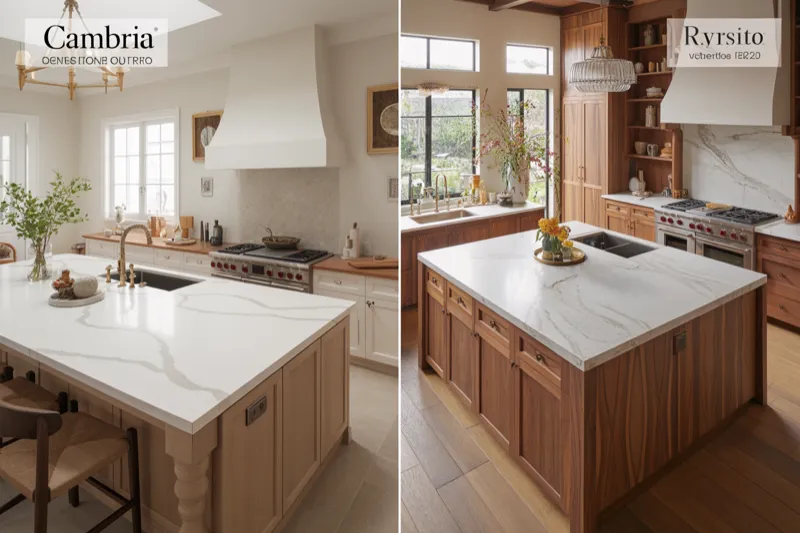
Modern quartz manufacturing has reached a level of sophistication that produces stunningly realistic stone patterns. Brands like Cambria offer collections that are virtually indistinguishable from natural Calacatta marble at arm's length, complete with dramatic veining, soft color transitions, and depth that mimics natural stone. For a closer look at marble-inspired options, see our guide on the most realistic quartz countertops.
Quartz also offers colors and patterns that do not exist in nature — pure solid whites, bold blacks, concrete-inspired textures, and industrial-look surfaces. The design possibilities are virtually limitless. And critically, quartz offers consistency. When your kitchen island requires three slabs of the same material, all three will match perfectly.
The Case for Quartzite's Appearance
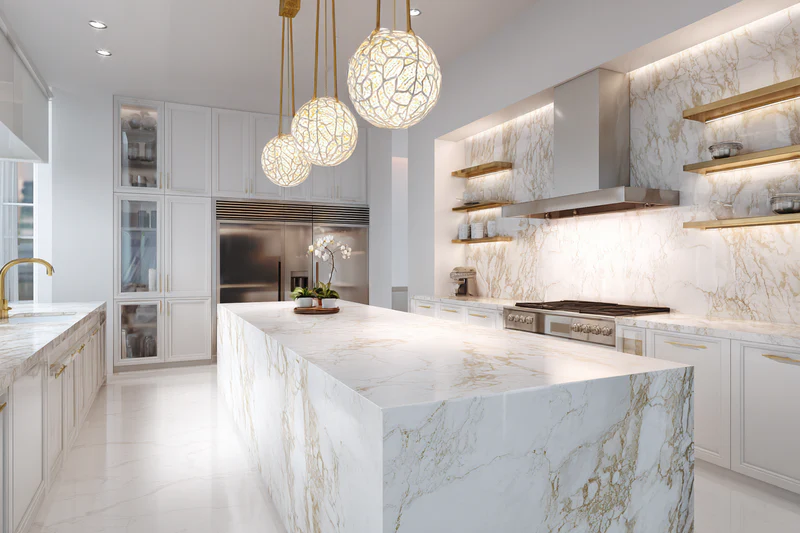
Quartzite's beauty is the beauty of the natural world. The veining patterns are organic, flowing, and unrepeatable. Hold a slab of Taj Mahal quartzite to the light and you will see translucent layers of gold, cream, and amber created by geological forces over millions of years. No factory can replicate this.
For homeowners who value one-of-a-kind natural beauty and want their countertops to be a conversation piece, quartzite delivers something engineered quartz simply cannot — genuine geological art. Every slab tells a story written by the Earth itself.
The tradeoff is unpredictability. The quartzite slab you see in the warehouse may look different from the one you saw online. Color, veining, and pattern vary from slab to slab and even across the same slab. This is part of the charm for some homeowners and a frustration for others. Always select your specific slabs in person.
Cost Comparison: Quartz vs Quartzite in South Florida
Pricing for both materials varies significantly based on the brand, color, complexity of the installation, and your location. Here is what South Florida homeowners can expect in 2026.
Quartz Pricing
- Entry-level quartz: $50-$65 per square foot installed (solid colors, basic patterns from MSI, Caesarstone level 1)
- Mid-range quartz: $65-$90 per square foot installed (marble-look patterns, popular Silestone and Caesarstone collections)
- Premium quartz: $90-$120+ per square foot installed (Cambria, designer Silestone collections, bookmatched patterns)
For a typical 40 square foot kitchen countertop project, quartz will cost approximately $2,000 to $4,800 installed. For a detailed breakdown, visit our quartz countertops cost guide.
Quartzite Pricing
- Entry-level quartzite: $70-$90 per square foot installed (White Macaubas, basic quartzites)
- Mid-range quartzite: $90-$140 per square foot installed (Taj Mahal, Sea Pearl, Fantasy Brown)
- Premium quartzite: $140-$200+ per square foot installed (rare or exotic varieties, bookmatched installations)
The same 40 square foot kitchen project in quartzite runs approximately $2,800 to $8,000+ installed.
Total Cost of Ownership
When calculating the true cost, factor in ongoing maintenance. Quartzite requires professional sealing every one to two years ($200-$400 per application) and stone-safe cleaning products. Over 15 years, that adds $1,500 to $3,000 to the total cost of ownership. Quartz has zero additional maintenance costs after installation.
Best Use Cases: Where Each Material Excels
Understanding where each material performs best helps narrow your decision.
Choose Quartz For:
- Indoor kitchens — especially if you want zero-maintenance and superior stain resistance
- Bathrooms — quartz's non-porous surface is ideal for high-moisture environments. See our bathroom vanity countertops page
- Matching across large projects — when you need multiple slabs to look identical
- Busy families — if you do not want to worry about sealing, special cleaners, or heat damage from a forgotten trivet
- Rental properties — durability with zero maintenance is ideal for landlords
- Commercial spaces — restaurants, hotels, and offices benefit from quartz's durability and easy cleaning. See our commercial countertops page
Choose Quartzite For:
- Outdoor kitchens — quartzite's UV resistance makes it the superior choice for South Florida's intense sunlight
- Homes where you cook with heat — if you regularly place hot pans directly on the counter
- Natural stone lovers — if you want genuine, one-of-a-kind geological beauty that cannot be replicated
- Statement pieces — bookmatched quartzite on a large island is a showstopper
- High-end custom homes — the natural rarity and beauty of quartzite signals luxury. See our quartzite countertops service
South Florida Climate Considerations
Living in South Florida adds a unique layer to the quartz vs quartzite decision. The climate here is unlike most of the country, and it affects countertop materials in specific ways.
Humidity and Moisture
South Florida averages 75-80% humidity year-round. This constant moisture exposure accelerates the breakdown of stone sealers, meaning quartzite may need resealing more frequently here than in drier climates. Quartz's non-porous surface is completely unaffected by humidity — a meaningful advantage in our coastal environment. For more on how our climate affects countertop choices, read our South Florida countertops guide.
Salt Air
For homes near the coast — from Jupiter to Miami Beach — salt air is a constant presence. Salt does not directly damage either material, but it can accelerate sealer degradation on quartzite. If you live within a few miles of the ocean, factor in more frequent sealing for quartzite countertops.
UV Exposure and Outdoor Kitchens
South Florida gets more sunlight than almost any region in the country. If you are building an outdoor kitchen, this matters significantly. Quartz can yellow and discolor with prolonged UV exposure, making it a poor choice for uncovered outdoor installations. Quartzite handles direct sunlight beautifully and will not fade, making it the better option for outdoor entertaining spaces, pool areas, and patio bars.
How to Tell Quartz and Quartzite Apart at the Showroom
One of the most common mistakes homeowners make is confusing these two materials — or worse, being sold one when they think they are buying the other. Here is how to tell them apart when visiting a stone yard or showroom.
- Check the label carefully. Reputable dealers clearly label every slab. If you are not sure, ask. Do not assume based on appearance alone.
- Look at the pattern. Quartzite has organic, flowing veining with natural irregularities. Quartz patterns, while realistic, tend to be more uniform and repetitive across the slab.
- Touch the surface. Quartzite may have slight natural texture variations. Quartz feels perfectly smooth and uniform across the entire surface.
- Compare two slabs of the same product. If they look nearly identical, it is quartz. If they differ noticeably in veining and color, it is natural quartzite.
- Ask about sealing. If the material needs sealing, it is quartzite (or another natural stone). Quartz never needs sealing.
- Beware of "soft quartzite." Some stones sold as quartzite are actually marble or dolomite that has not fully metamorphosed. True quartzite should be hard enough to resist scratching from a steel knife. Ask the dealer for a hardness test if you are uncertain.
At Griffin Quartz, we carry both materials and are transparent about exactly what you are buying. Visit our Boca Raton showroom to see quartz and quartzite samples side by side.
Which Should You Choose? A Decision Guide
After working with thousands of South Florida homeowners, here is our honest guidance on choosing between quartz and quartzite.
Choose quartz if:
- Low maintenance is your top priority
- You want a consistent look across multiple slabs
- Your countertops are indoors and away from direct sunlight
- You have a busy household and cannot manage annual sealing
- You want the widest possible selection of colors and patterns
- Budget is a factor — quartz generally offers more options at lower price points
Choose quartzite if:
- You love the look and feel of genuine natural stone
- Heat resistance matters — you cook frequently and want to place hot pots directly on the surface
- You are building an outdoor kitchen or bar in South Florida
- You want a truly unique, one-of-a-kind countertop
- You are comfortable with the annual sealing maintenance commitment
- You are building a luxury custom home where natural materials are valued
Neither material is objectively "better" than the other. They are different tools for different needs. The right choice depends entirely on your lifestyle, your aesthetic preferences, your kitchen habits, and your willingness to maintain the surface over time. For a broader look at how all countertop materials compare, see our complete material comparison guide.
Frequently Asked Questions
What is the difference between quartz and quartzite?
Quartz countertops are engineered stone made from approximately 90-95% ground natural quartz crystals mixed with polymer resins and pigments. Quartzite is a 100% natural metamorphic rock formed when sandstone is subjected to extreme heat and pressure deep within the earth. While they share a similar name, they are completely different materials with different properties, maintenance needs, and price points.
Is quartzite more expensive than quartz?
Generally yes. In South Florida, quartz countertops typically cost $50 to $120 per square foot installed, while quartzite ranges from $70 to $200+ per square foot installed. Quartzite's higher price reflects the cost of quarrying natural stone, the specialized fabrication it requires, and its relative rarity compared to manufactured quartz. However, entry-level quartzite and premium quartz can overlap in the $80-120 range.
Does quartzite need to be sealed?
Yes. Quartzite is a natural stone with some porosity, so it requires sealing upon installation and resealing every one to two years to protect against stains and moisture absorption. Quartz, by contrast, never needs sealing because its engineered composition creates a completely non-porous surface. In South Florida's humid climate, this is an important maintenance consideration.
Can you use quartzite outdoors in South Florida?
Yes, quartzite is one of the best natural stone options for outdoor countertops in South Florida. Unlike quartz, which can discolor when exposed to prolonged UV light, quartzite is naturally UV-resistant and handles direct sunlight without fading or yellowing. This makes quartzite an excellent choice for outdoor kitchens, pool bars, and patio entertainment areas throughout South Florida.
Which is more durable, quartz or quartzite?
Both are extremely durable, but in different ways. Quartzite ranks 7 on the Mohs hardness scale, making it harder than granite and highly resistant to scratching. Quartz rates around 7 as well but gains additional chip resistance from its resin binders. Quartzite has superior heat resistance and can handle hot pots directly, while quartz can be damaged by temperatures above 300°F. For scratch and heat resistance, quartzite wins. For stain resistance and low maintenance, quartz wins.
How can you tell the difference between quartz and quartzite at a showroom?
There are several ways to tell them apart. Quartzite has natural, organic veining patterns that are never perfectly symmetrical — no two slabs are identical. Quartz has more uniform, consistent patterns because it is manufactured. Quartzite feels cooler to the touch and may have slight texture variations across the surface. Quartz has a perfectly smooth, uniform feel. If you scratch the underside of a sample with a knife, quartzite will resist the scratch while softer imposters like marble sold as quartzite will scratch easily.
Is quartzite better than quartz for kitchens?
Neither is universally better — it depends on your priorities. Choose quartzite if you want natural stone beauty, superior heat resistance, and do not mind annual sealing. Choose quartz if you want zero maintenance, perfect stain resistance, and consistent color matching across multiple slabs. Both are excellent for kitchen countertops. In South Florida's humid climate, quartz has a practical edge due to its non-porous surface and zero sealing requirements.
Ready to See Both Materials in Person?
Visit our Boca Raton showroom to compare quartz and quartzite samples side by side. Our experts will help you choose the perfect material for your project. Call (720) 324-1436 or request a free estimate online.
Get FREE Estimate