
What Are Quartz Slabs and Why Are They So Popular?
Quartz slabs are engineered surfaces made from over 90% crushed natural quartz combined with resins and pigments. The result is a non-porous, ultra-durable, and hygienic surface that has become one of the most sought-after materials for countertops, vanities, and accent walls. Unlike natural stones such as granite or marble, quartz slabs offer several key advantages:
- Consistency in color and pattern — every slab is engineered for uniformity
- Low maintenance — no sealing required, ever
- Extreme durability — resistant to chips, scratches, and stains
- Wide design range — from pure whites to dramatic veined patterns
Types of Quartz Slabs Available in 2025
Solid Colors
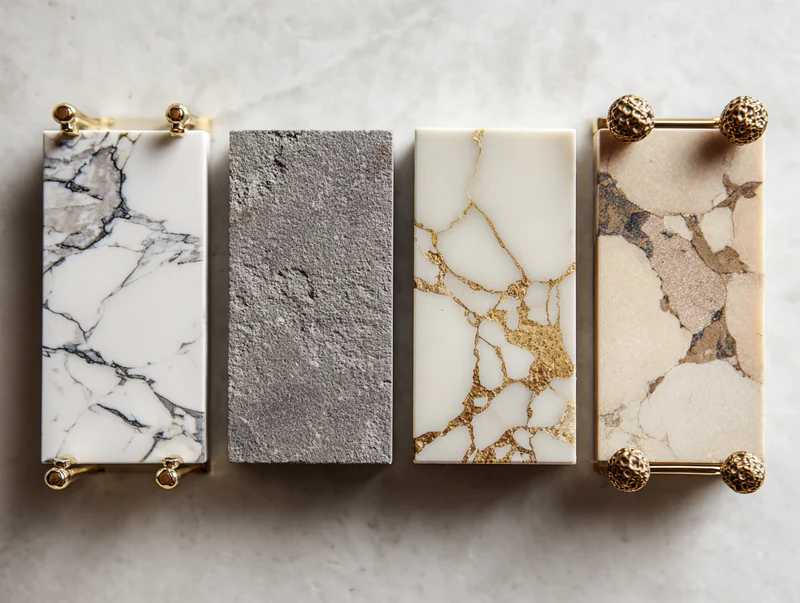
Perfect for contemporary kitchens and minimalist spaces, solid-color quartz slabs come in pure white, matte black, soft beige, and everything in between. These clean, uniform surfaces let your cabinetry and fixtures take center stage while providing a polished, timeless backdrop.
Marble-Inspired Quartz
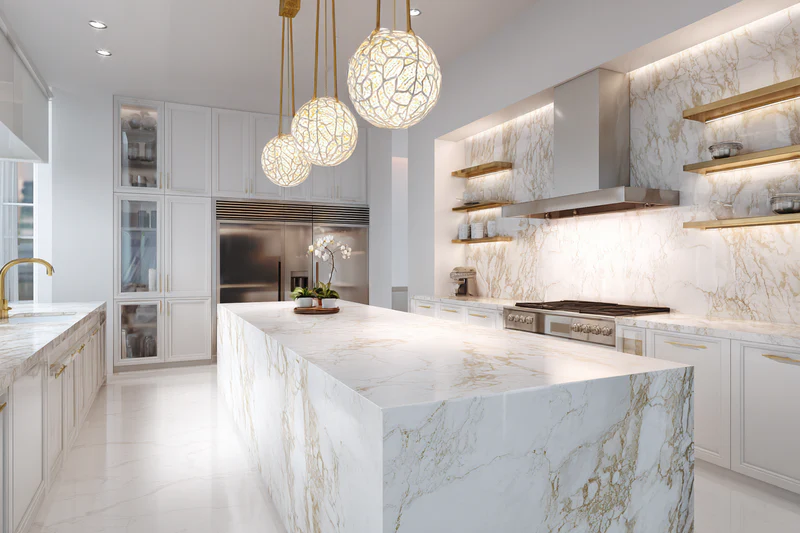
If you love the look of Calacatta or Carrara marble but not the maintenance, marble-inspired quartz is your answer. These slabs mimic the luxurious veining and depth of natural marble without the need for sealing or the risk of etching. The result is timeless elegance that holds up to everyday life. Browse our gallery to see marble-inspired quartz in real installations.
Granite-Inspired Quartz
For a speckled, earthy look, granite-inspired quartz offers the natural beauty of granite with the performance benefits of engineered stone. These slabs work especially well in rustic, transitional, and traditional kitchen designs.
Bold and Exotic Quartz
For homeowners who want to make a statement, bold and exotic quartz slabs feature dramatic veining and colorful pigments that turn your countertop into a conversation piece. These slabs are ideal for statement islands, accent walls, and feature surfaces where design impact is the priority.
Where to Buy Quartz Slabs
Local Fabricators (Best Option)
Working with a local fabricator gives you the most personalized experience. You can view full slabs in person, get expert advice on design and layout, and receive custom cutting and professional installation — all from one team. Griffin Quartz offers a curated selection of premium quartz slabs paired with expert fabrication and installation, so you get a seamless experience from selection to completion.
Big-Box Retailers
Home improvement stores carry quartz countertops, but the selection is often limited in both color and quality. Most big-box retailers also don't provide professional fabrication services, meaning you'll need to coordinate with a separate installer — adding time and complexity to the process.
Online Slab Marketplaces
Online marketplaces offer large inventories and competitive pricing, but buying quartz sight-unseen is risky. Photos may not accurately reflect the true colors and veining of a slab, and shipping costs for heavy stone slabs can be significant. If you go this route, always request physical samples before committing.
How Much Do Quartz Slabs Cost in 2025?
Quartz slab pricing varies based on brand, design complexity, and thickness. Here's a general breakdown of what to expect:
- Budget Quartz: $40 – $60 per square foot
- Mid-Range Quartz: $60 – $90 per square foot
- Luxury Quartz: $90 – $150+ per square foot
In addition to the slab itself, plan for installation costs of $10 – $30 per square foot. Additional costs may include edge profiles, sink and cooktop cutouts, and custom fabrication. For a personalized estimate, request a free consultation from the Griffin Quartz team.
How to Choose the Right Quartz Slab
1. Set a Budget
Before you start shopping, establish a clear budget that covers both the material and installation costs. This will help narrow your options and ensure you find the best value within your range.
2. Match Your Design Style
Your quartz slab should complement the overall aesthetic of your space. Modern kitchens tend to look best with sleek whites and blacks, traditional spaces pair well with warm earth tones, and luxury designs shine with marble-inspired dramatic veining. Visit our kitchen and bath page for design inspiration.
3. Consider Thickness
Quartz slabs come in two standard thicknesses: 2cm and 3cm. A 2cm slab is ideal for vertical applications and backsplashes, while 3cm is the standard choice for countertops — offering a more substantial look and greater structural support.
4. View Full Slabs in Person
Small samples are helpful but don't capture the full veining pattern and scale of a slab. Whenever possible, visit a showroom or fabricator to view the actual slab that will be cut for your project. At Griffin Quartz, we encourage every client to see our full slabs before making a final decision.
Caring for Your Quartz Countertops
One of the biggest advantages of quartz is how easy it is to maintain. Follow these simple care tips to keep your surfaces looking new for decades:
- Use mild soap and water for everyday cleaning
- Avoid bleach, harsh chemicals, and abrasive cleaners
- Wipe up spills immediately to prevent potential staining
- Always use cutting boards — quartz is scratch-resistant, but not scratch-proof
- Use trivets or hot pads under hot cookware to prevent thermal shock
Quartz vs. Other Countertop Materials
Quartz vs. Granite
While granite is a beautiful natural stone, quartz has several advantages: it's non-porous (no sealing required), offers more consistent color and pattern, and is easier to maintain. Granite requires periodic resealing and is more susceptible to staining over time.
Quartz vs. Marble
Marble is stunning but notoriously high-maintenance — it stains easily, scratches, and requires regular sealing. Quartz delivers a similar luxurious look with far greater durability and significantly lower maintenance requirements.
Quartz vs. Laminate
Laminate countertops are budget-friendly but don't compare to quartz in terms of durability, appearance, or longevity. Quartz is a premium surface that adds real value to your home, while laminate is prone to chipping, peeling, and heat damage.
Overall, quartz offers the best mix of luxury, practicality, and long-term value — making it the top choice for homeowners who want a surface that looks beautiful and performs flawlessly for years to come.
Frequently Asked Questions
Are quartz slabs better than granite?
Yes — quartz slabs are non-porous, require no sealing, and offer more consistent designs compared to granite. They are also more hygienic and easier to maintain over time, making them the preferred choice for modern kitchens and bathrooms.
How long do quartz slabs last?
With proper care, quartz slabs can last 25+ years. Their engineered composition makes them extremely durable and resistant to chips, cracks, and staining — far outlasting many other countertop materials.
Can quartz be used outdoors?
Some UV-resistant quartz products can be used outdoors, but not all quartz is suitable for direct sunlight exposure. Always check with your installer to confirm which slabs are rated for outdoor use in your climate.
What's the best quartz brand?
Caesarstone, Silestone, and Cambria are among the leading quartz brands known for quality, design variety, and durability. The best brand for you depends on your budget, design preferences, and the specific application.
Where can I buy quartz slabs in South Florida?
Griffin Quartz offers a wide selection of premium quartz slabs along with expert fabrication and professional installation services throughout South Florida. Contact us for a free consultation and to view our full slab inventory.
Find Your Perfect Quartz Slab
From premium slab selection to expert installation, Griffin Quartz delivers results that blend beauty, durability, and value.
Get a Free Consultation